AI & ML
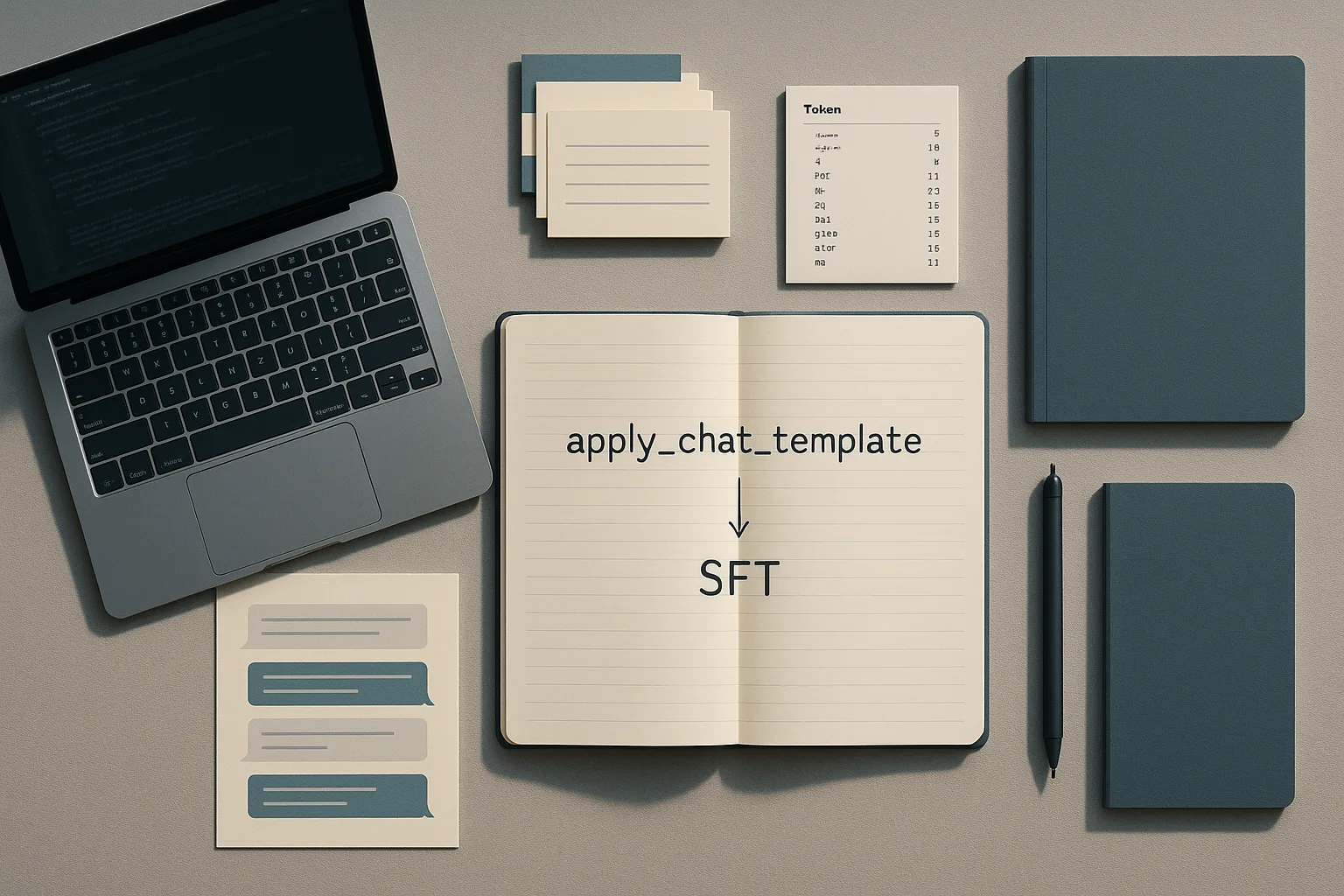
TRL’s SFTTrainer will auto-apply the model chat template for conversational datasets, but Qwen2.5’s tokenizer expects the exact ChatML-style message structure and generation prompt handling — if you skip apply_chat_template or mask padding incorrectly, you silently train on the wrong tokens and degrade alignment.
19 min read
AI & ML
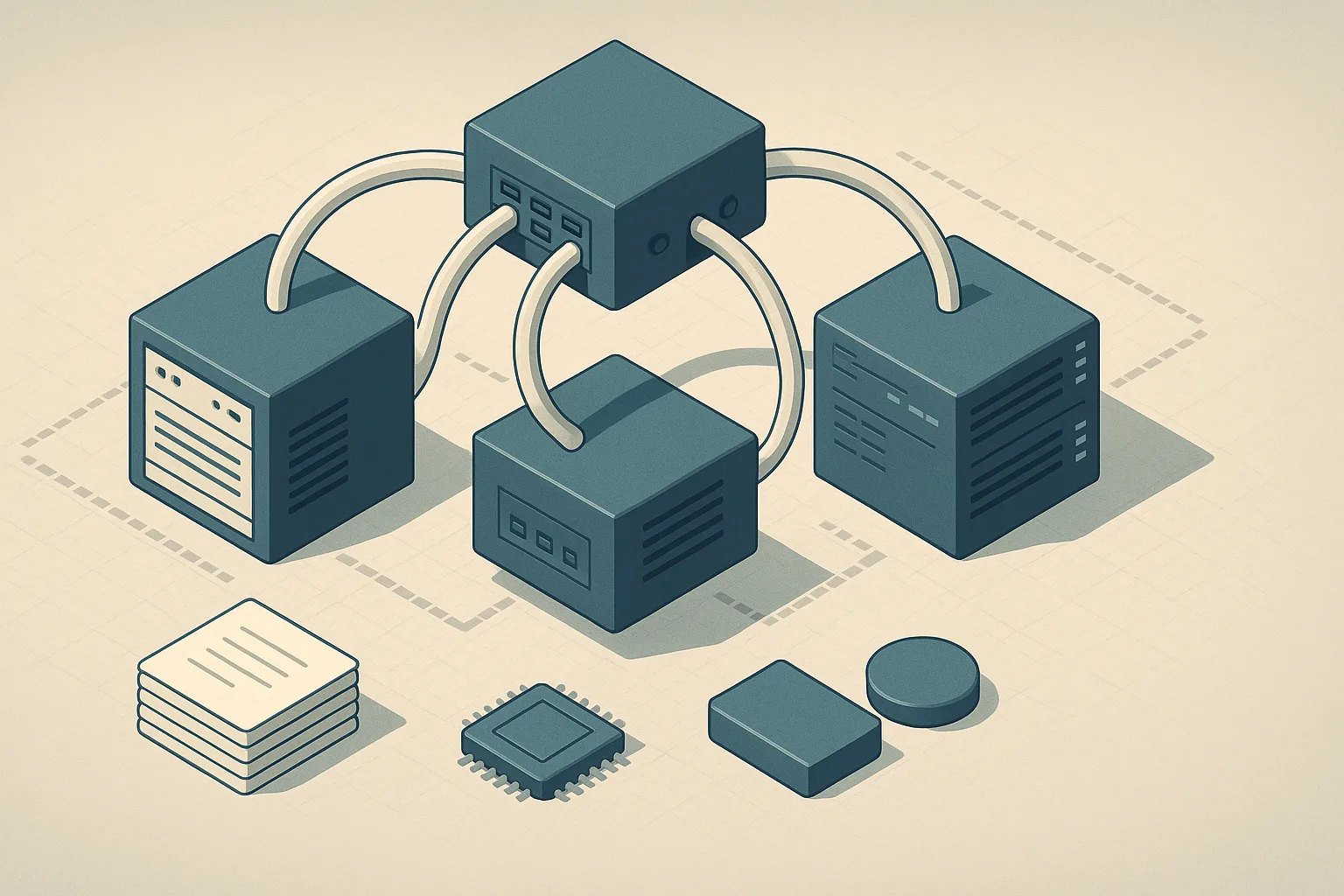
Megatron-LM’s design composes tensor parallelism, pipeline parallelism, data parallelism, expert parallelism, and context/sequence parallelism inside Megatron Core so large transformers can be partitioned across GPUs without changing the model’s mathematical behavior — but the trade-off is added communication, scheduling complexity, and a need to balance activation recomputation against throughput.
25 min read
AI & ML
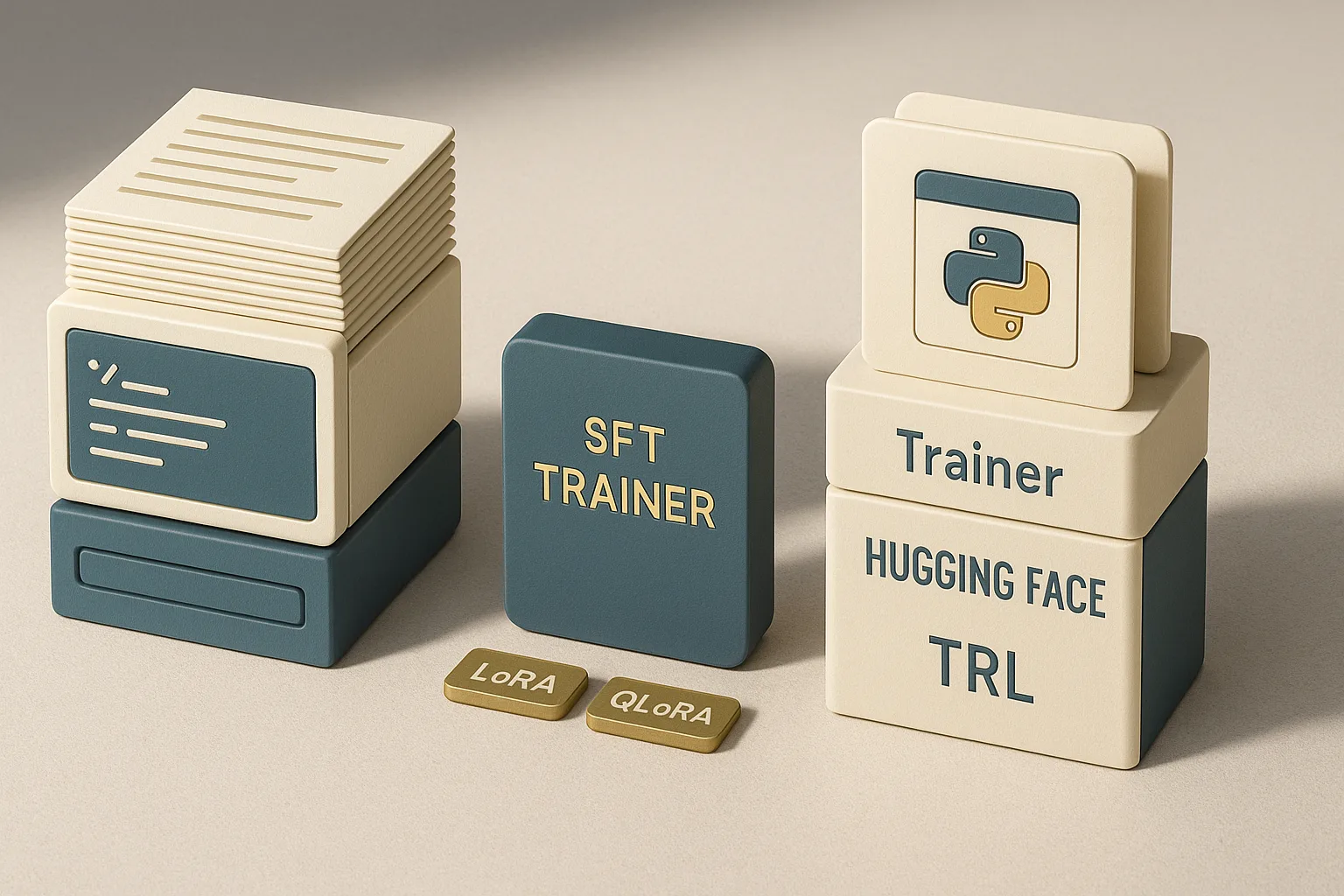
LLaMA Factory packages a broader turnkey training surface — 100+ models, multiple fine-tuning and preference-tuning methods, and a zero-code UI/CLI — while TRL stays closer to the Hugging Face ecosystem and is better when you want a lighter, library-first SFT/PPO/DPO workflow; the right choice depends on how much orchestration you want to absorb yourself.
22 min read
AI & ML
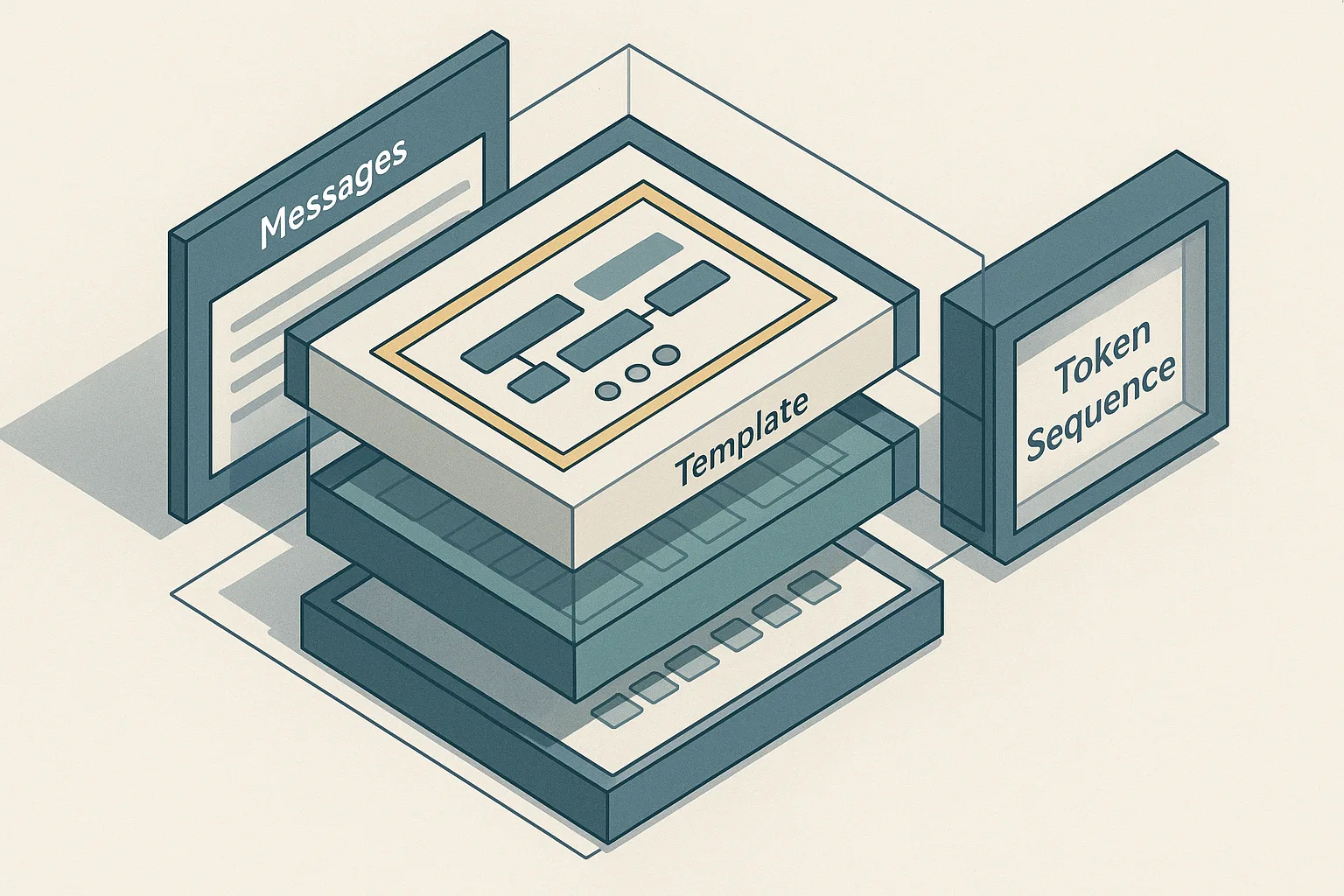
Qwen-style tool templates encode tool calls and tool responses as explicit structured chat turns, which lets agentic SFT learn when to emit function calls versus natural language — but that same rigid structure makes tokenization, message ordering, and role boundaries critical to correctness.
24 min read
AI & ML
Axolotl’s multi-node path works either through Accelerate/FSDP2 config or torchrun rendezvous, and for InfiniBand the docs explicitly recommend torchrun with NCCL_IB_DISABLE=0 and tuned NCCL_SOCKET_IFNAME/NCCL_BUFFSIZE settings — but every node must share the same Axolotl commit and config, and the launcher choice changes how you debug NCCL and rendezvous failures.
19 min read
AI & ML
SimPO replaces the reference-log-ratio term with a reference-free reward and the released repo reports stronger results than DPO variants on AlpacaEval 2, MT-Bench, and Arena-Hard — but the authors also caution that performance depends heavily on learning-rate and beta tuning, so the method is not plug-and-play.
22 min read
AI & ML
Qwen3-Coder-Next’s value proposition is benchmark movement on coding-agent evaluations such as SWE-Bench and Terminal-Bench, but the article needs to separate reported benchmark gains from what the paper actually proves about instruction-tuning design and agentic generalization.
19 min read
AI & ML
In 2026, the main differentiators are not just benchmark averages but retrieval quality, multilingual coverage, dimensionality, and operational constraints — OpenAI text-embedding-3-small is the cost-effective default, Voyage is positioned for top retrieval accuracy, and BGE-M3 is the common self-hosted multilingual pick, but model choice is sticky because re-embedding an existing corpus is expensive.
22 min read
AI & ML
OpenRLHF can cover a large slice of RLHF/post-training work because it combines Ray, vLLM, and DeepSpeed into a production-ready stack — but once you need unusual model topologies, heavy multi-turn orchestration, or tighter control over throughput and scheduling, the hidden cost shifts from licensing to platform engineering and GPU utilization.
24 min read
AI & ML
ORPO’s monolithic objective folds supervised and preference learning into a single optimization path, removing the separate reference model used by DPO-style methods — which simplifies the training stack and can reduce orchestration overhead, but shifts more of the stability burden onto loss design and tuning.
23 min read
AI & ML
The economic break-even for self-managed LoRA usually depends less on adapter training cost than on ongoing platform labor, governance, and model-lifecycle overhead, so the cheapest per-token path can still be the most expensive operating model once staffing and reliability are counted.
21 min read
AI & ML
Managed RAG platforms win when the organization values faster time-to-value, vendor support, and lower specialist headcount more than total control, but the open-source build path pays off only when the team can absorb ongoing platform engineering, integration, and maintenance costs.
24 min read