AI & ML
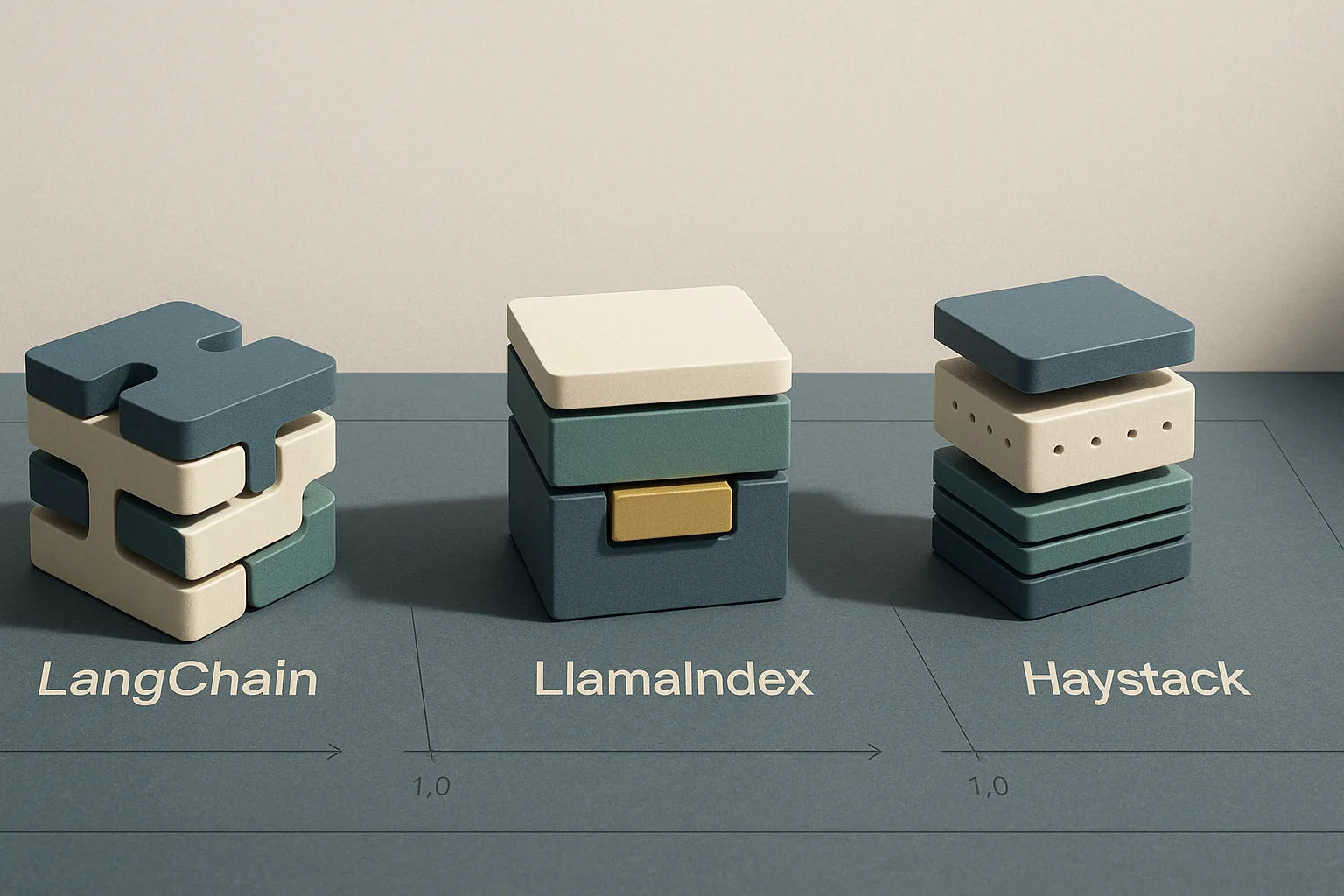
When frameworks are tested under identical models, embeddings, retrievers, and query budgets, the real differences show up less in answer accuracy and more in orchestration overhead and token efficiency, with benchmarked gaps on the order of milliseconds and hundreds of tokens per query.
18 min read
AI & ML
Late chunking preserves global context by embedding the full document before slicing, while sentence-window retrieval keeps the similarity unit small but restores surrounding sentences at prompt time — contextual retrieval tends to preserve semantic coherence better, but late chunking is more efficient and can sacrifice completeness if the downstream window is too small.
24 min read
AI & ML
The economic breakpoint is usually not the evaluator itself but the hidden operating cost of keeping golden sets, regression gates, and production trend dashboards current — buy when you need fast time-to-value and shared observability, build when your team can absorb ongoing maintenance, model-judge spend, and platform engineering overhead.
20 min read
AI & ML
AnswerDotAI rerankers is the lightest integration path because it exposes a unified API across cross-encoders, FlashRank, API rerankers, T5, ColBERT, and multimodal models — but the choice still depends on whether you optimize for deployment simplicity, cost, or latency, because API rerankers like Jina trade external dependency and per-token pricing for much lower average latency than local BGE-style cross-encoders in recent comparisons.
19 min read
AI & ML
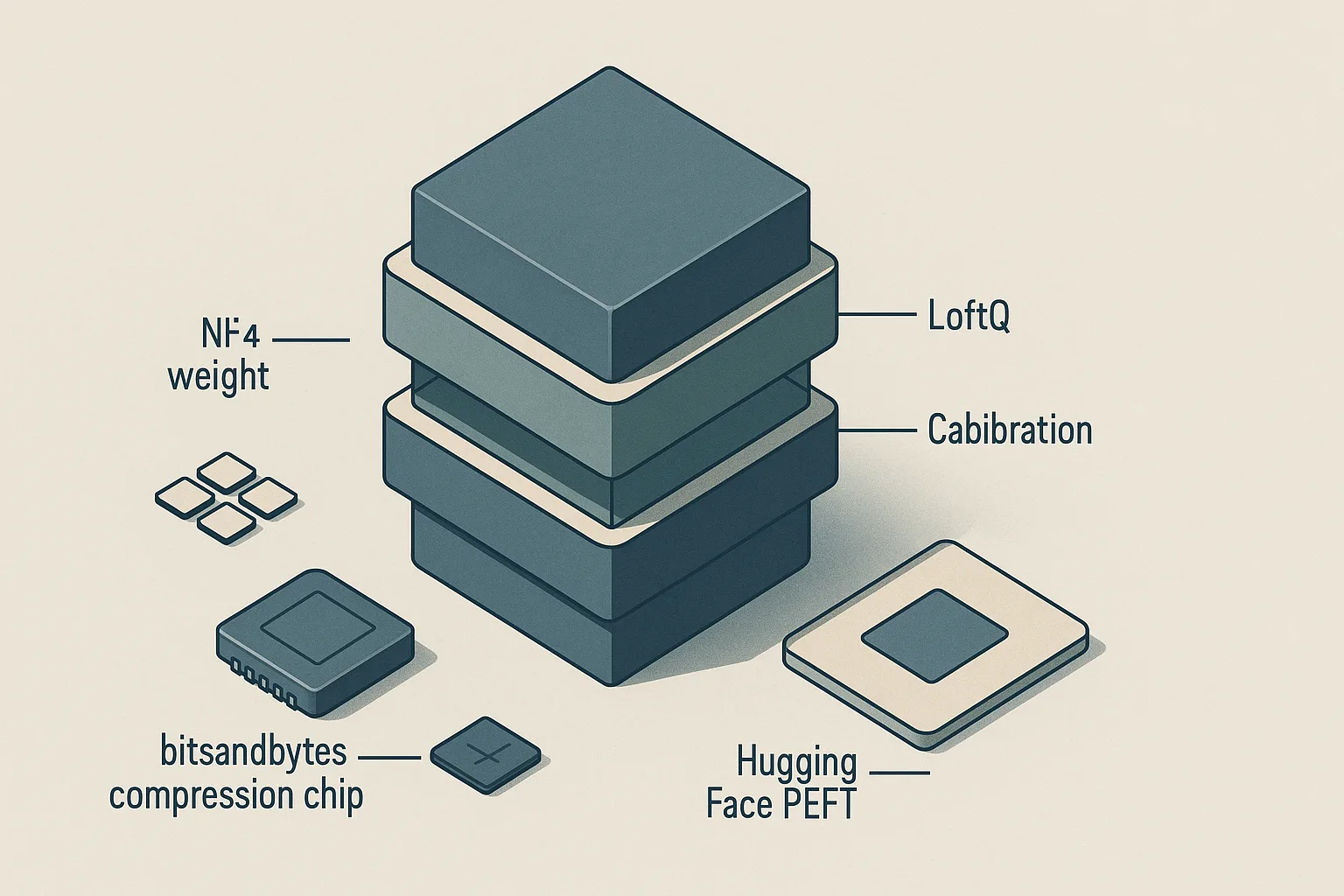
PEFT’s LoftQ guidance shows the key 2026 shift is not just 'use 4-bit QLoRA' but 'initialize adapters to compensate for quantization error' and, when possible, target all linear layers so LoftQ can act across the model, with NF4 remaining the recommended quant type.
24 min read
AI & ML
The reranker usually matters most in the search tool chain — recent production guidance says tool quality is dominated by reranking more than embedding dimension or retrieval method — but it pays for itself only when the incremental relevance lift justifies the 100–300ms tax and added infra/API spend, because faster systems can still be better on total cost if they avoid wasted search turns and lower downstream LLM context usage.
24 min read
AI & ML
LoRA works by freezing the base weight matrix and learning a low-rank update AB, and PEFT’s newer variants change the scaling or decomposition of that update: rsLoRA uses alpha/sqrt(r) instead of alpha/r to stabilize higher ranks, while DoRA splits magnitude and direction to improve low-rank performance.
22 min read
AI & ML
MoDeGPT compresses Transformer modules with joint low-rank decomposition, avoiding recovery fine-tuning while still reporting 90–95% zero-shot performance at 25–30% compression and up to 46% throughput gain — but the gains come from a training-free, module-level reformulation that is not the same as universally safe pruning for every layer or model family.
22 min read
AI & ML
LlamaIndex is the faster path for retrieval-heavy RAG because its purpose-built indexing/query abstractions reduce code volume by about 30-40% versus LangChain-style assembly, but LangChain/LangGraph becomes the stronger choice once the app needs stateful orchestration, checkpointing, and human-in-the-loop control.
17 min read
AI & ML
The real split is not “which tool has more metrics,” but whether you need RAG-specialist scoring (RAGAS), tracing-first monitoring (TruLens), pytest-native regression gates (DeepEval), or reference-free benchmark-style evaluation (Open RAG Eval) — but none of these can reliably tell you when the retrieved context is factually wrong versus merely topically similar.
22 min read
AI & ML
Curator tackles multi-tenancy by managing isolation and memory trade-offs so tenants can share vector infrastructure without blowing up tail latency, but the paper’s value is in the measured latency-vs-memory trade-off rather than claiming universal best-in-class ANN performance.
19 min read
AI & ML
GraphRAG works by converting enterprise text into entities and relations, then traversing a knowledge graph to assemble connected subgraphs before generation — the key advantage is multi-hop context fidelity, but the tradeoff is heavy ontology design, extraction errors, and slower traversal than plain vector search.
21 min read