An 8x10 is the right rug for most living rooms — it anchors a standard sofa-plus-chairs seating group without overwhelming the floor plan, and it works in rooms roughly 12x15 feet and larger. The harder question isn't size; it's whether you want a polypropylene washable you can toss in the machine when the dog tracks in mud, a wool rug you'll be vacuuming on a low setting for the next decade, or a budget synthetic that gets the job done for under $300. This guide separates those three choices cleanly, names real products with real prices, and explains exactly when each one makes sense.
Why 8x10 rugs are the default living room size
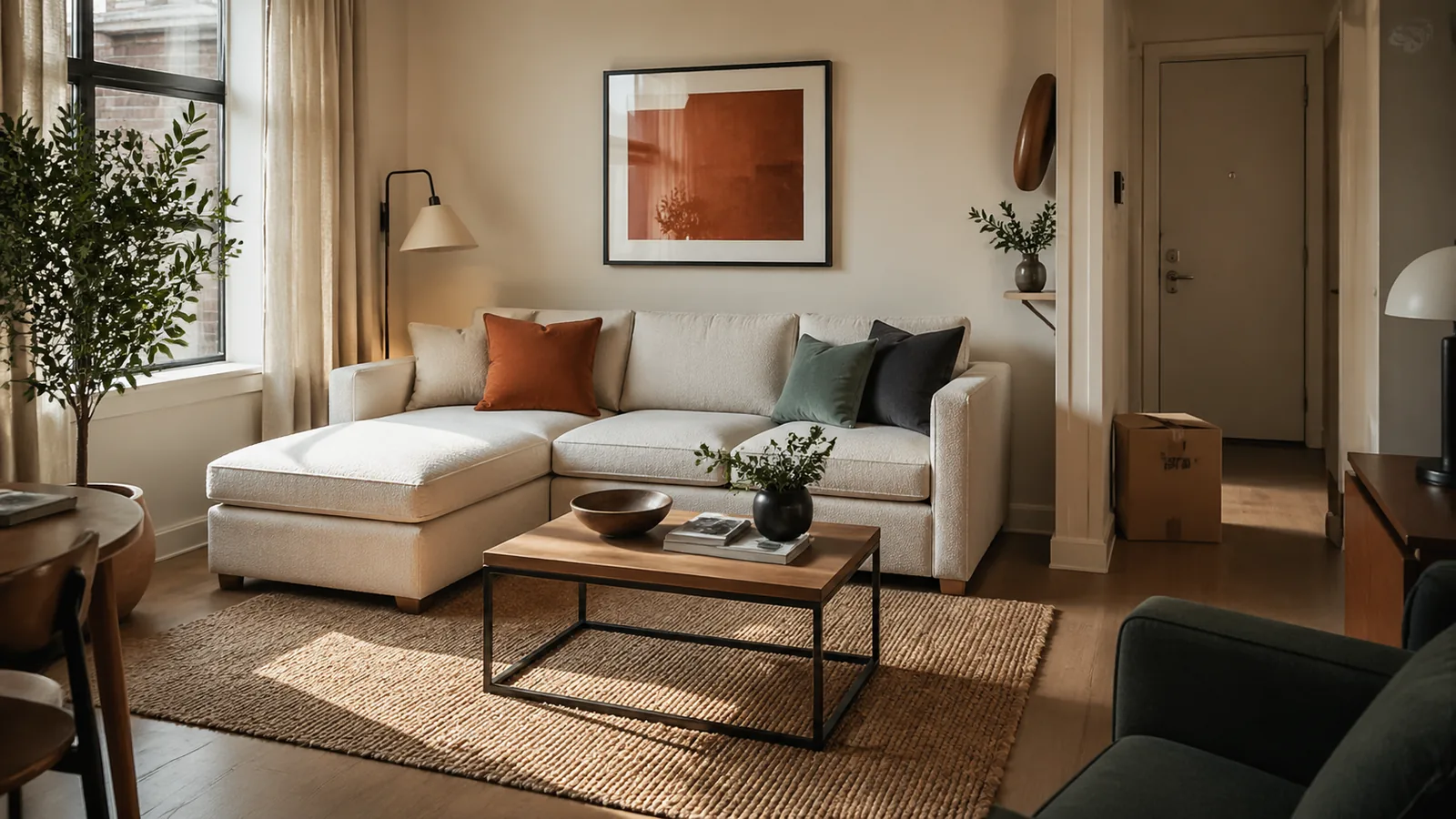
The 8x10 is the most common seating-area rug size in the US market for a practical reason: it fits the front-legs-of-furniture rule that interior designers have used for decades. Place the front legs of your sofa, loveseat, and chairs on the rug, and the whole seating group reads as one unified zone. The rug doesn't need to go under the entire sofa — just the front legs. That placement works with a standard 8-foot or 9-foot sofa, a coffee table, and one or two accent chairs, which is exactly the furniture footprint a typical living room holds. Target's 8x10 area rug category is one of the most actively shopped rug sizes on the site, reflecting how consistently decorators default to this footprint.
Pro Tip: Tape out an 8x10 rectangle on your floor with painter's tape before you buy. If the shape feels cramped, your room is probably better suited to a smaller or larger rug.
How to tell if an 8x10 rug will fit your sofa and coffee table
Quick room-fit checklist:
- Measure your sofa's length. Most standard sofas run 84–96 inches (7–8 feet). An 8x10 gives you at least 12 inches of rug on either side of an 84-inch sofa.
- Check front-leg clearance. The front legs of the sofa and any flanking chairs should land on the rug; back legs can float on the floor.
- Account for the coffee table. A typical 48x24-inch coffee table fits comfortably within the rug's 10-foot length with space to pull chairs closer.
- Leave a border. Aim for a visible band of bare floor between the rug edge and the wall so the room keeps some breathing room.
[Image: Diagram — sofa and chairs arranged with front legs on an 8x10 rug, coffee table centered, 12–18 inch border visible on all sides]
If your sofa's front legs and your accent chair's front legs both land on the rug simultaneously, the 8x10 is doing its job.
When to size up to a 9x12 rug instead
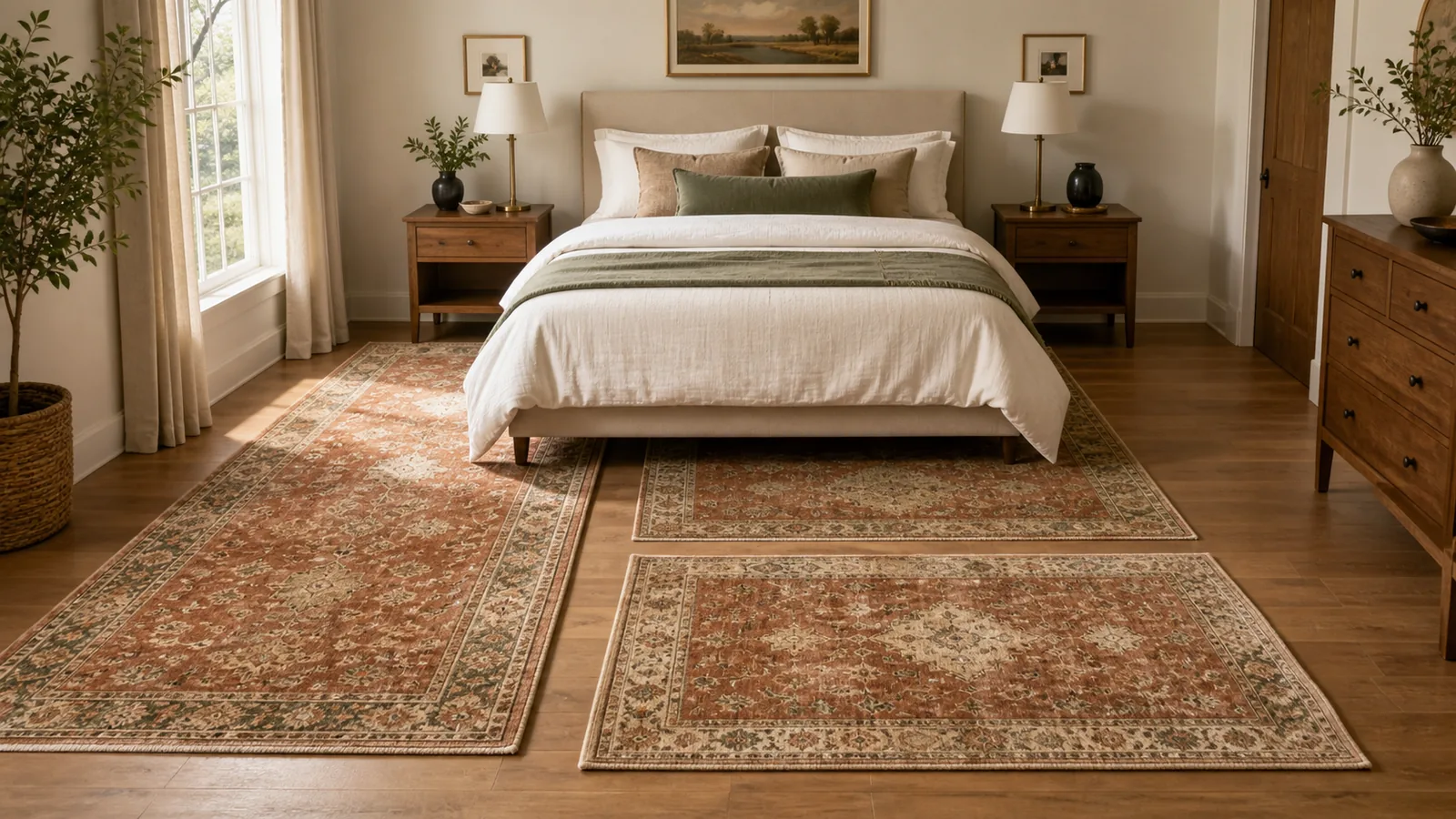
Go to a 9x12 when your room is noticeably larger, or when you have a sectional that needs a broader landing zone on the floor. At that scale, an 8x10 looks like a bath mat dropped under a much larger piece of furniture. A 9x12 also makes more sense when all four legs of the sofa need to sit on the rug — a preference in some design approaches — or when you want to anchor a large sectional that wraps an L-shape. Visually, the rule is simple: if the rug no longer extends comfortably beyond the main seating pieces, size up.
Quick comparison of washable synthetic, wool, and budget 8x10 rugs
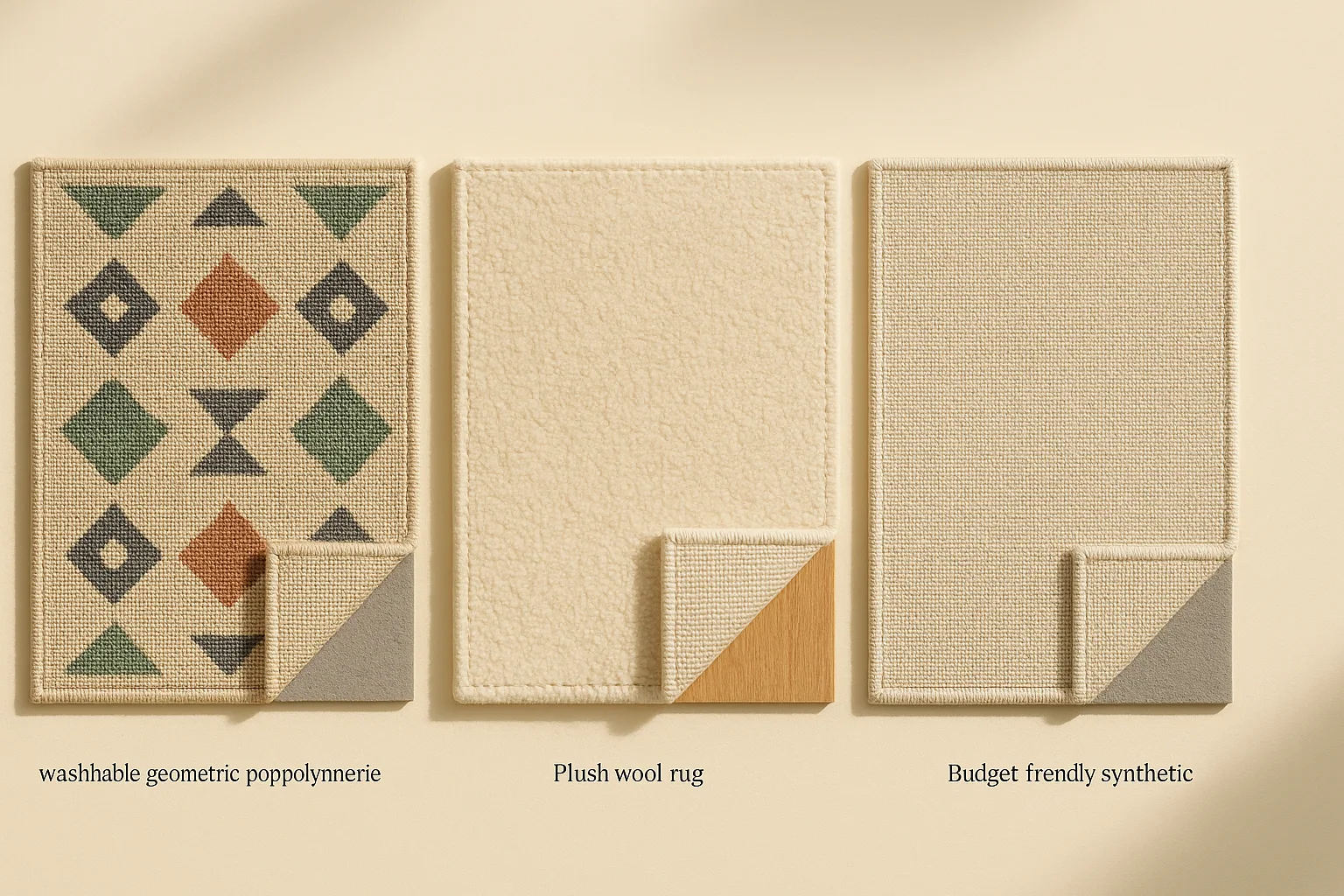
Here's where most roundups fall short: they list products without explaining what you're actually choosing between. The three buckets below map to genuinely different use cases, not just price points.
| Type | Best for | Price example | Return policy note |
|---|---|---|---|
| Washable synthetic (polypropylene) | Pets, kids, renters, high traffic | Rugs.com Theia 8x10: $211 sale price (compare at $559) | Free 30-day returns; free shipping |
| Wool | Style-first rooms, long-term investment | West Elm 8x10 wool rugs: prices vary by item and finish | Return policy varies by item; check the listing before ordering |
| Budget synthetic (polypropylene, polyester) | First apartment, temporary styling, low commitment | Target 8x10 area rugs: budget options often land under $300 | Free returns; free shipping on orders over $35 |
A specific price anchor: the Rugs.com Theia 8x10 is currently $211 (compare at $559) with free shipping and free 30-day returns — and it's 100% polypropylene, machine washable, stain resistant, and shed-free. That's the benchmark for the washable synthetic bucket. West Elm's wool 8x10 category starts considerably higher, and Target's category spans the full budget range with free shipping on orders over $35 and free returns.
What to compare: pile height, backing, shedding, and stain resistance
Shopper-facing spec checklist — what to look at before you buy:
- Pile height. Target defines low-pile washable rugs as under 0.5 inches. The Rugs.com Theia is exactly 1/2 inch. Low pile is easier to vacuum, less likely to trap pet hair, and easier to push furniture across. Anything above 3/4 inch starts behaving more like a shag — beautiful, harder to maintain.
- Backing. A Target washable rug listing shows a backing percentage of 40 and notes "rug pad recommended." Backing affects how a rug grips the floor and whether it needs an additional pad. Higher backing percentages generally mean more stability, but you still want to check whether the rug comes with grip backing or is bare on the underside.
- Stain resistance. This is a construction feature, not a coating you can add later. The Rugs.com Theia is described as "Stain-Resistant, Machine Washable... Shed-free" — a trifecta that matters if you have kids or dogs. Wool has natural lanolin that resists some staining but is far less forgiving of liquid spills than a polypropylene rug.
- Shedding. New wool rugs shed loose fibers — this is normal and expected, not a defect. New polypropylene rugs labeled "shed-free" should not shed at all.
- Rug pad need. Multiple retailer listings across Rugs.com, West Elm, and Target note "rug pad recommended" — which means it's sold separately, not included. Budget $74–$99 for a quality pad on top of your rug cost.
- Certifications. Some washable synthetic rugs carry OEKO-TEX STANDARD 100 certification, which means the materials have been tested for harmful substances. Worth checking on individual Amazon or Target listings if this matters to your household.
Best washable 8x10 rugs for busy living rooms
Washable 8x10 rugs are the most practical choice for any living room that sees daily traffic, pets, kids, or renters who want easy cleanup without a security deposit risk. The market has expanded fast — you can now find low-pile polypropylene options in the low $200s that are genuinely machine washable and not just "spot clean only" rugs with misleading marketing.
Affiliate Product Card: Rugs.com Theia 8' x 10' Washable Area Rug — $211 sale price, free shipping, free 30-day returns, 100% polypropylene, machine washable, stain resistant, and shed-free.
Watch Out: "Machine washable" doesn't always mean your home washer can handle it. Large 8x10 rugs can require a larger-capacity machine, and when in doubt, a commercial laundromat washer is the safer choice.
Rugs.com 8' x 10' Washable Theia Rug review
Bottom line: At $211 with free shipping and free 30-day returns, the Theia is the closest thing to a no-risk washable rug at this size.
Here's everything the product page confirms:
- Material: 100% polypropylene
- Pile height: 1/2 inch (qualifies as low-pile under the standard 0.5-inch threshold)
- Construction: Shed-free, stain resistant, machine washable
- Shipping: Free
- Returns: Free 30-day returns
- Sale price: $211 (compare at $559 — a $348 difference)
The listing describes it as: "Easy Care, Stain-Resistant, Machine Washable Theia Multi Rug. 8' x 10' Rectangle. Shed-free. Perfect for Office, Living Room, Dining Room, Bedroom."
What the page doesn't specify is which washer capacity is required for home laundering — Rugs.com doesn't publish a cubic-foot minimum on this rug's page. The practical answer: if your home washer is small or uses a center agitator, plan to use a commercial machine. That is a once-in-a-while task, so it rarely changes the buying decision.
On the same Rugs.com platform, two pad options are available for 8x10 rugs: the Non-Slip Rug Pad at $74 and the Everyday Performance Rug Pad at $99 (a cushioned felt option, 1/3 inch thick). Add either to your cart at checkout — the rug itself does not come with a pad included.
Why low-pile washable rugs are easier to vacuum and maintain
Pile height under 0.5 inches is the functional threshold that separates easy-care rugs from more demanding ones. At that height, a standard upright or canister vacuum rolls across the surface without getting bogged down, pet hair doesn't embed itself in the fibers, and crumbs don't fall through to a layer you can't reach. Rugs with a 3/4-inch or higher pile — including many plush or shag styles — trap more debris, require more passes with the vacuum, and take significantly longer to dry after washing.
For a living room that gets daily foot traffic, the 1/2-inch pile on the Theia (and similar low-pile polypropylene options on Target and Amazon) hits the right balance: soft enough underfoot, short enough to maintain without effort.
Best wool 8x10 rugs for a softer, more durable look
Wool earns its price premium in two ways: texture and longevity. A quality wool rug has a natural resilience that bounces back after furniture compression, a warmth underfoot that polypropylene doesn't replicate, and a depth of color from hand-dyeing or flatweave construction that photographs well and ages gracefully. If you're designing a room for long-term use rather than a quick refresh, wool is worth serious consideration.
West Elm's 8x10 wool rug category is a reliable US starting point for the style-first buyer — the selection ranges from flatweave to tufted to hand-knotted, and the category page stays current with in-stock options. Prices aren't fixed on category pages, so check individual listings, but expect to pay significantly more than the washable synthetic bucket.
One honest note: wool rugs are not machine washable. When they need deep cleaning, professional rug cleaning is the practical route.
When wool is worth the extra cost
Choose wool over a washable synthetic when the room is primarily for adult use, you want a rug that improves with age rather than being replaced in a few years, and visual texture is a design priority. Wool holds a hand-knotted or tufted pattern with more depth than printed polypropylene.
The trade-off that West Elm's own product pages acknowledge: "Shedding of loose fibers is normal with new wool rugs" and "shedding will diminish with regular vacuuming, typically within three to six months." That's six months of picking wool fluff off dark sofas before the rug settles. For a household with dark upholstery or a low tolerance for this phase, a shed-free polypropylene rug is the more honest recommendation.
Wool makes the most sense in a style-first room with moderate traffic — a formal living room, a sitting area that gets weekend use, or a primary living space in an adult household. It's the wrong call for a playroom-adjacent space or anywhere a dog sleeps daily.
What to know about wool shedding, pile, and rug pads
West Elm's product care notes are specific: "Shedding of loose fibers may occur but will diminish over time. Expect the most shedding to occur within the first 3–6 months. Vacuum regularly on a low power setting to prevent debris from settling into the fiber roots."
That "low power setting" instruction matters. Running a powerful upright vacuum on a high-pile wool rug can pull and distort fibers. Use the lowest suction setting or a dedicated rug attachment for the first several months.
On pile: wool rugs vary widely from flatweave (nearly no pile) to hand-tufted (1/2 to 1 inch) to shag constructions. Flatweave wool is easier to vacuum and dry; higher-pile tufted wool is softer underfoot but requires more care.
On rug pads: West Elm explicitly notes that a rug pad is recommended and sold separately across its wool rug product pages. A pad adds stability and helps protect the floor from friction over time.
Best budget-friendly 8x10 rugs under $300
You can get a stable, good-looking 8x10 rug for under $300 — the Rugs.com Theia at $211 is the clearest proof of that. The washable-plus-budget overlap is real: low-pile polypropylene rugs are cheap to manufacture at scale, and the price wars between Rugs.com, Target, and Amazon have pushed quality options well under the $300 ceiling.
Cost Snapshot: Washable 8x10 polypropylene rugs: $150–$250. Basic flatweave or printed synthetics: $80–$180. Rug pad add-on: $74–$99. Total for a complete setup under $300 is achievable if you prioritize washable synthetic over wool.
Cost breakdown for a complete under-$300 setup
| Item | Example | Cost |
|---|---|---|
| Rug | Rugs.com Theia 8x10 | $211 |
| Optional pad | Non-Slip Rug Pad | $74 |
| Optional cushioned pad | Everyday Performance Rug Pad | $99 |
| Total with non-slip pad | Rug + pad | $285 |
| Total with cushioned pad | Rug + pad | $310 |
What you give up under $300: handmade construction, natural fiber, and premium thickness. What you keep: a rug that covers the floor, anchors the seating group, and wipes clean. For a first apartment, a temporary rental, or a room that's mid-redesign, that trade-off is entirely reasonable.
Where to shop budget 8x10 rugs at Target and Amazon
Target is the most convenient starting point for in-person browsing. The 8x10 area rug category ships free on orders over $35 (an 8x10 rug will always clear that threshold) and offers free returns — meaning you can order two options, keep the one that works, and return the other at no cost. Target's washable rug sub-category includes machine-washable low-pile options filtered for easy sorting.
Amazon carries a wide range of washable 8x10 rugs — the searchable marketplace shows dozens of low-pile polypropylene options, many with free Prime shipping and 30-day return windows. Some listings specifically advertise OEKO-TEX STANDARD 100 certification — verify this on the individual product page before treating it as confirmed, since the search results surface it as a keyword but individual listings need spot-checking. Ruggable is another washable-rug brand shoppers often compare here, especially when they want a removable, machine-washable cover system.
Do you need a rug pad for an 8x10 living room rug?
Yes, in almost every case — and the word "recommended" on a retailer listing is the polite way of saying "you'll regret skipping it." A rug pad does three things: it keeps the rug from sliding (a safety issue on hardwood), it adds a small amount of cushion underfoot, and it protects the floor from friction damage over time. Target's washable rug listings include "Rug Pad Recommended" directly in care details. West Elm's wool rug pages note the same. Rugs.com surfaces pad options at checkout for every 8x10 listing.
The only situation where you can skip the pad: if the rug has a thick rubber or grip backing integrated into the construction (some budget synthetics do). Check the product page — if it says "non-slip backing included," you may not need an additional pad. If it just says "backing: 40%," add a pad.
Non-slip pads versus cushioned pads for hardwood and carpet
Rugs.com's pad options illustrate the two main choices clearly:
- Non-Slip Rug Pad — $74: Thin, grippy, designed to hold the rug in place on hard floors. No added height, no cushion. Right choice for hardwood, tile, or LVP floors where you want the rug to stay put without adding much stack height.
- Everyday Performance Rug Pad — $99: Cushioned non-slip felt, 1/3 inch thick. Adds comfort underfoot and a bit of height. Better choice when you want a softer feel or when you have an older hardwood floor that could benefit from friction protection.
On carpet, pads work differently — you need a carpet-to-rug pad with a different grip texture to prevent the rug from shifting on the carpet pile. Check that any pad you buy specifies its intended surface.
How to clean and launder a large washable rug at home
The label says "machine washable" — here's what that actually means for an 8x10. Some large washable rugs can be too bulky for a standard home washer, so check the care label before you start. Fold or loosely roll the rug to load it into the drum — don't cram it in.
Laundering checklist for a washable 8x10:
- Check the care label first. Even if a rug is labeled washable, the label may specify cold water only, gentle cycle, or no spin cycle.
- Pre-treat visible stains with a fabric-safe spot cleaner before loading.
- Fold or loosely roll the rug to load it into the drum — don't cram it in.
- Use cold water and a gentle cycle with a mild, dye-free detergent.
- Skip the fabric softener. It can coat synthetic fibers and reduce stain resistance over time.
- Run an extra spin cycle to remove as much water as possible before drying.
- Air dry flat or hang over a railing outdoors — do not put an 8x10 in a residential dryer unless the care label explicitly permits it.
Watch Out: If the rug feels too bulky for your machine, use a commercial laundromat machine instead. Running an oversized rug in an undersized washer strains the machine and can damage the rug's backing.
Spot cleaning, vacuuming, and drying without damage
Between full washes, weekly vacuuming is the main maintenance task. For low-pile polypropylene rugs, a standard vacuum on a regular setting works fine — the 1/2-inch pile doesn't require special handling.
For wool rugs, West Elm's explicit guidance is to "Vacuum regularly on a low power setting to prevent debris from settling into the fiber roots." That low-power instruction protects the fiber structure during the shedding phase and beyond.
Spot cleaning: blot liquids immediately — never rub, which spreads the stain and pushes it deeper into the pile. For polypropylene rugs, a diluted dish soap solution on a clean cloth works for most spills. For wool, use a wool-safe cleaner and test on an inconspicuous corner first.
Drying after spot cleaning: lay the rug flat and let it dry completely before putting furniture back on it. Trapped moisture under furniture legs can lead to mildew and underside staining.
8x10 rug buying checklist for renters and new-home decorators
A blank living room is a good problem to have — the 8x10 size means you're not locked into a permanent furniture arrangement. For renters especially, the combination of a washable rug, a non-slip pad (no adhesives, no damage), and free returns from Target or Rugs.com means you can commit to a look without real financial risk.
Renter-safe shopping checklist:
- Choose a rug with free returns (30 days is standard at Target and Rugs.com) so you can test it in the actual room
- Pick a non-slip pad — no adhesive or tape needed on hardwood floors
- Stick with low-pile (under 0.5 inches) for easy vacuuming and move-out cleanup
- Machine-washable construction means no professional cleaning costs before moving out
- Avoid rugs with jute or natural-fiber backing, which can stain hardwood floors if moisture gets underneath
Pro Tip: Take a photo of your sofa, curtains, and walls before you shop. Rug color looks different on a product page than it does next to your specific paint color and furniture. When in doubt, order two finalists and return the one that doesn't work.
Best style families for 8x10 living room rugs
The good news: the 8x10 size is available across every major style at the retailers below. Here's how to shop by style without overpaying:
- Modern/minimalist: Low-pile geometric or solid rugs in neutral tones (ivory, charcoal, warm beige). Find them on Target and Amazon for under $200.
- Coastal/boho: Flatweave or jute-blend patterns in natural tones. Jute is not washable and not ideal for high traffic, but it's beautiful in a low-traffic sitting area.
- Farmhouse/transitional: Distressed or overdyed patterns in cream, rust, and navy. Rugs.com's pattern library covers this heavily.
- Modern traditional/elevated: Hand-knotted or tufted wool in medallion or abstract patterns. West Elm's wool 8x10 category is the right starting point.
- Eclectic: Vintage-style or patchwork kilim rugs. Etsy has actual vintage options at varying prices.
The pattern that reads well across the most style contexts: a low-contrast geometric or abstract in a neutral base color. It doesn't compete with bold furniture, it photographs well, and it's easier to swap out accessories around.
Living room rug FAQs
Are 8x10 rugs common for seating areas?
Yes — the 8x10 is one of the most common rug sizes for living room seating areas in the US. The sizing rule: front legs of the sofa and chairs should sit on the rug, anchoring the seating group visually. In a room that's 12x14 feet or larger, an 8x10 is the natural default. Target's 8x10 area rug category reflects how consistently this size is searched for and purchased across the US market.
How big should an area rug be in a living room?
For most standard living rooms, an 8x10 works with the front-legs-on-rug placement. Larger rooms or those with a big sectional often need a 9x12 to look proportional. Smaller rooms may work better with a 6x9. The consistent rule: the rug should extend beyond the coffee table on all sides and allow at least the front legs of every seating piece to rest on it.
Can you wash an 8x10 rug in a washing machine?
Some 8x10 rugs are labeled machine washable — the Rugs.com Theia, for example, is explicitly marketed as "Machine Washable." But not every home washer can handle the load. Always check the care label on the specific rug, since washer settings and temperature limits vary by construction. If the rug is too bulky for your machine, use a commercial laundromat machine instead.
Do you need a rug pad for an area rug?
Nearly always, yes. Multiple retailers — including Target, West Elm, and Rugs.com — note "rug pad recommended" on product listings. A pad prevents sliding on hardwood and LVP, adds cushion, and protects floors from friction. The exception is if your rug has a manufacturer-integrated non-slip rubber backing — check the listing. Rugs.com offers a Non-Slip Rug Pad at $74 and an Everyday Performance cushioned pad at $99 for 8x10 rugs.
What is the best material for an area rug in a living room?
It depends on your priority. Polypropylene is the most practical choice — stain resistant, shed-free, often machine washable, and widely available under $300 for an 8x10. Wool is the better choice for longevity and texture in lower-traffic, style-driven rooms, but it costs more, sheds during the first 3–6 months, and requires professional cleaning. Polyester sits between the two on price and durability. If you have pets, kids, or frequent spills, polypropylene wins. If you're furnishing a formal sitting room for the long term, wool is worth the investment.
Sources & References
- Rugs.com — Theia 8' x 10' Washable Area Rug (product page) — Verified specs: 100% polypropylene, 1/2-inch pile, machine washable, stain resistant, shed-free, $211 sale price, free shipping, free 30-day returns
- Rugs.com — Oregon 8x10 listing (rug pad pricing reference) — Non-Slip Rug Pad $74; Everyday Performance Rug Pad $99, 1/3 inch thick
- Target — 8x10 Area Rugs category page — Free shipping on orders $35+, free returns; confirms 8x10 as a standard seating-area rug size
- Target — NuLoom Moroccan Blythe Area Rug listing — Pile height under 0.5 inches, backing 40%, rug pad recommended
- Target — Low-pile washable rugs category (under 0.5 in.) — Defines low-pile threshold for washable rug classification
- Target — Machine-wash washable rugs category — Budget-range machine-washable options
- West Elm — 8x10 Wool Rugs category page — Live US wool rug shopping source
- West Elm — Amina Rug (wool care notes) — Shedding normal in new wool; diminishes with vacuuming over 3–6 months; rug pad recommended, sold separately
- West Elm — Lumini Rug (wool vacuuming guidance) — Vacuum on low power setting; shedding diminishes within first 3–6 months
- Amazon — Washable 8x10 area rugs search — US marketplace availability for washable 8x10 options
- Amazon — OEKO-TEX 8x10 area rug search — OEKO-TEX STANDARD 100 as a searchable certification filter for 8x10 rugs
Keywords: Rugs.com Theia Rug, Rugs.com Everyday Performance Rug Pad, Rugs.com Non-Slip Rug Pad, Target, Wayfair, West Elm, Ruggable, OEKO-TEX STANDARD 100, polypropylene, wool, machine washable, low pile, rug pad, stain resistant, shed-free