AI & ML
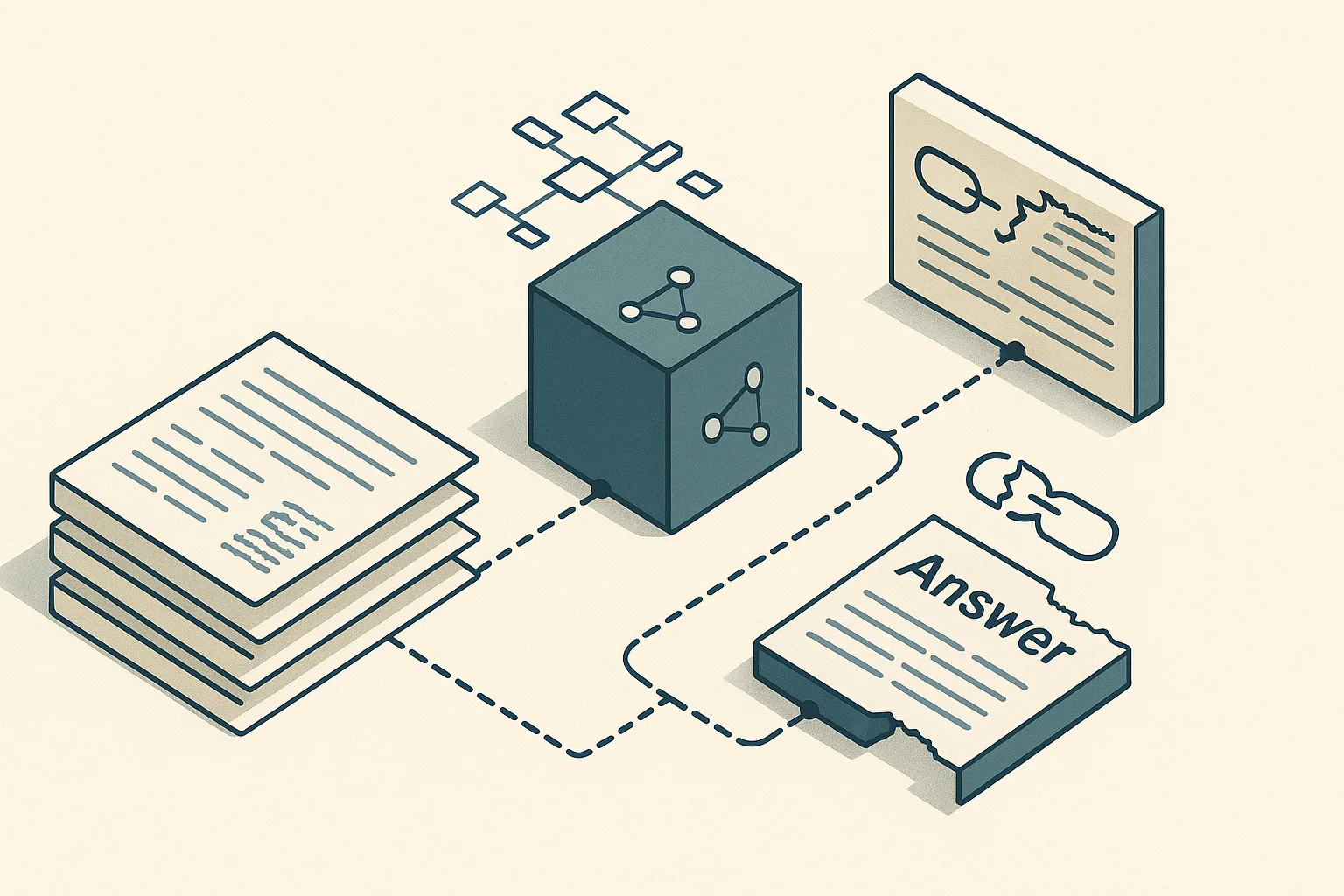
Naive RAG is fast and cheap for localized FAQ-style queries, but GraphRAG and modular RAG become the better investment when questions require multi-hop reasoning, cross-document relationships, or stronger governance — the catch is that GraphRAG adds ontology/graph-maintenance overhead and can be slower to operate.
24 min read
AI & ML
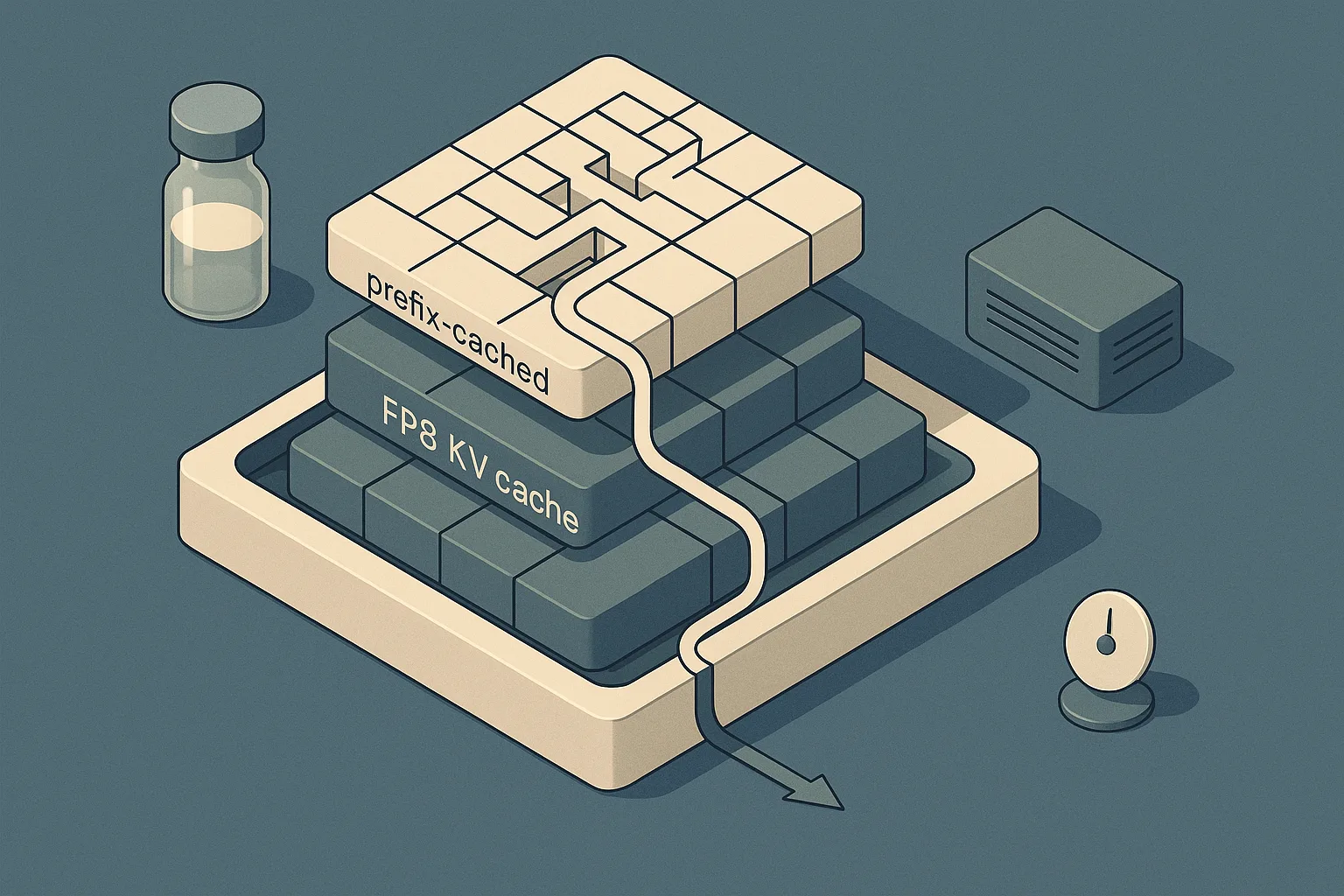
vLLM’s FP8 KV cache can coexist with prefix caching because automatic prefix cache keys are still block-hash based — but on ROCm/W7900 the combination has a documented crash path, so the safe article must show the exact FP8 calibration path and the validation checks that prove prefix cache reuse still works.
18 min read
AI & ML
MultiHop-RAG shows that naive top-k retrieval breaks down when answers require chaining evidence across documents — the practical result is markedly weaker multi-hop QA accuracy than graph-augmented approaches, but the benchmark demonstrates failure modes more than it proves a single production architecture is universally superior.
18 min read
AI & ML
Orion’s ANE runtime shows that Apple’s private ANE path can support direct execution, zero-copy IOSurface-backed tensor I/O, and delta compilation that cuts recompilation from 4,200 ms to 494 ms per step — but the design is constrained by MIL IR restrictions, weight baking at compile time, and reliance on private _ANEClient/_ANECompiler APIs.
23 min read
AI & ML
Framework-agnostic RAG harnesses optimize classic metrics like faithfulness and context recall, while agentic-evaluation harnesses add source attribution, tool-call accuracy, and retrieval-necessity checks — the catch is that agentic metrics only matter once your system actually calls tools or iterates over multiple steps.
18 min read
AI & ML
QServe’s W4A8KV4 path is compelling because it reduces dequantization overheads while preserving quality, and the OmniServe integration shows how that low-bit pipeline combines with sparse attention to maximize throughput — but the benefit is tied to GPU-serving stacks that can actually execute the fused kernels.
16 min read
AI & ML
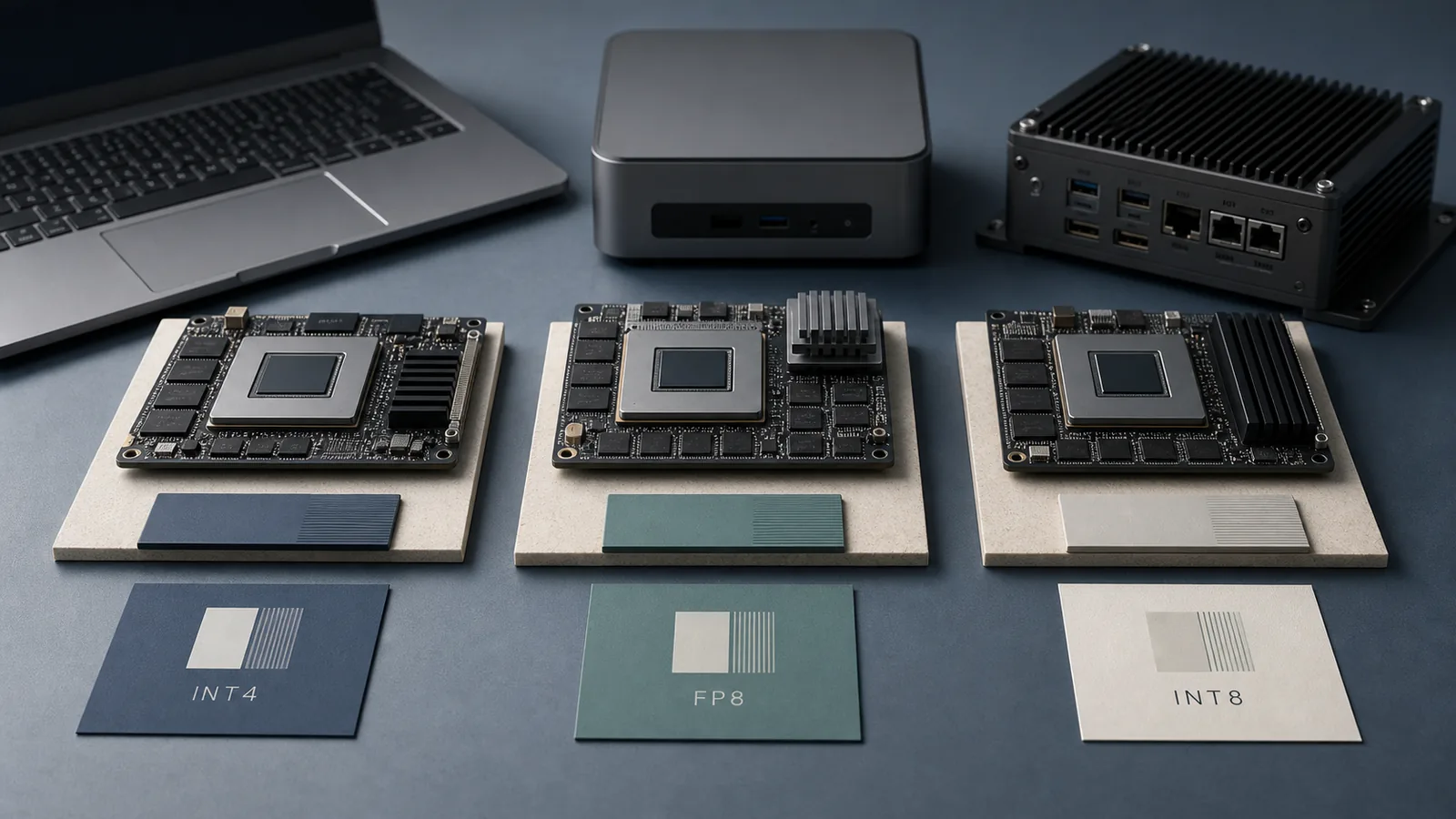
vLLM’s quantization matrix now spans INT4 W4A16, INT8 W8A8, FP8 W8A8, GGUF, and quantized KV cache support — but the right choice depends on whether your accelerator actually accelerates the format, because framework support does not guarantee kernel-level speedups on every consumer GPU, laptop, or Jetson device.
26 min read
AI & ML
vLLM’s support for Mixtral and DeepSeek-V3 pairs expert parallelism with PagedAttention, continuous batching, and distributed inference so MoE serving can stay memory-efficient — but the deployment path is constrained by model-specific parallelism settings, supported hardware backends, and the need to tune GPU memory utilization and batching for expert-heavy traffic.
18 min read
AI & ML
vLLM turns each complete KV block into a content-addressed cache entry using `hash(prefix_tokens + block_tokens)` — this removes the need for a tree of shared prefixes and lets the engine evict blocks with refcount 0 using LRU-style policy, but partial blocks and advanced attention patterns are deliberate edge cases the design leaves for later.
24 min read
AI & ML
KeyDiff is positioned around key-similarity-aware eviction, while H2O and StreamingLLM represent broader history- or window-based retention strategies — the comparison should center on how each policy trades memory ceiling, long-context accuracy retention, and serving latency under strict cache budgets, rather than treating them as interchangeable compressions.
24 min read
AI & ML
MoE serving only makes sense when token-level sparsity and model scale create enough throughput or memory-efficiency headroom to offset added routing, expert balancing, and operational complexity — but the break-even point depends on traffic shape, GPU utilization, and the cost of handling expert imbalance rather than on model quality alone.
18 min read
AI & ML
Distillation can beat quantization on runtime throughput when the student is much smaller, but the break-even depends on whether the upfront training and engineering cost is amortized over enough tokens; quantization usually wins on time-to-production and capex avoidance, while distillation wins only when sustained inference volume justifies the extra training spend.
18 min read