Converting a garage adds usable square footage without touching your home's footprint — but the price gap between a rough workshop and a legal, rentable ADU is massive, and most homeowners don't realize where the budget jumps until they're already talking to a contractor. The short answer: plan on a few thousand dollars for a functional workshop or gym shell, and much more once you cross into habitable-space requirements for an accessory dwelling unit.
How much does a garage conversion cost by project type?
Cost Snapshot: Workshop: a few thousand dollars to get the space functional | Finished gym: higher once comfort systems are added | ADU: significantly more once plumbing, permits, and habitability requirements apply
The spread in garage conversion pricing comes down to one question: does the finished space need to meet the code requirements for habitable living? A workshop or gym is still "non-habitable" storage/utility space under most building codes, which keeps the permit load light and the systems list short. The moment you want a kitchen, bathroom, and a tenant, you're building habitable space — and every system in the structure gets reviewed against a higher standard.
[Image: Three-path cost comparison diagram — workshop, gym, and ADU side by side]
According to Angi's garage remodel cost guidance, garage remodel projects range from $7,000 to $30,000 depending on scope. Fixr's garage remodeling cost page puts the average cost to remodel a garage at about $11,000 for a full 2-car garage remodel with new cabinet storage and floor coating. Those two benchmarks mostly capture the workshop-to-finished-gym spectrum; a legal ADU goes beyond that because it adds habitability systems that a basic remodel does not.
Basic workshop garage conversion cost
A basic workshop garage conversion — the kind that gives you insulated walls, a durable floor, decent lighting, and enough outlets to run tools — typically runs on the lower end of that garage-remodel spectrum for a standard two-car garage.
Fixr's garage remodeling cost data puts the average full two-car garage remodel with cabinet storage and floor coating at around $11,000, which aligns well with a workshop build that doesn't require HVAC or plumbing.
Here's what that budget typically covers:
- Insulation: Batt insulation in the walls and ceiling sized to your local code requirements and climate zone
- Air sealing: Foam around penetrations, weatherstripping on the man-door, and addressing the garage door gap
- Floor coating: A single-color epoxy floor coating system from a brand like Rust-Oleum RockSolid or a professionally applied polyurea runs $2–$7 per square foot installed
- Lighting: LED shop lights (Lithonia, Keystone, or similar) on dedicated switched circuits
- Basic electrical: A 20-amp dedicated circuit or two for tool use, GFCI-protected outlets per NEC 210.8 requirements for garage spaces
- Drywall: 5/8" Type X drywall if the garage shares a wall with the house (required for fire separation under IRC R302.6 regardless of what you plan to use the space for)
Pro Tip: Even if you're "just doing a workshop," the fire separation wall between the garage and the house interior is not optional in most jurisdictions — it's an existing code requirement that many homeowners skip, then have to retrofit later before a home sale.
Finished garage gym cost
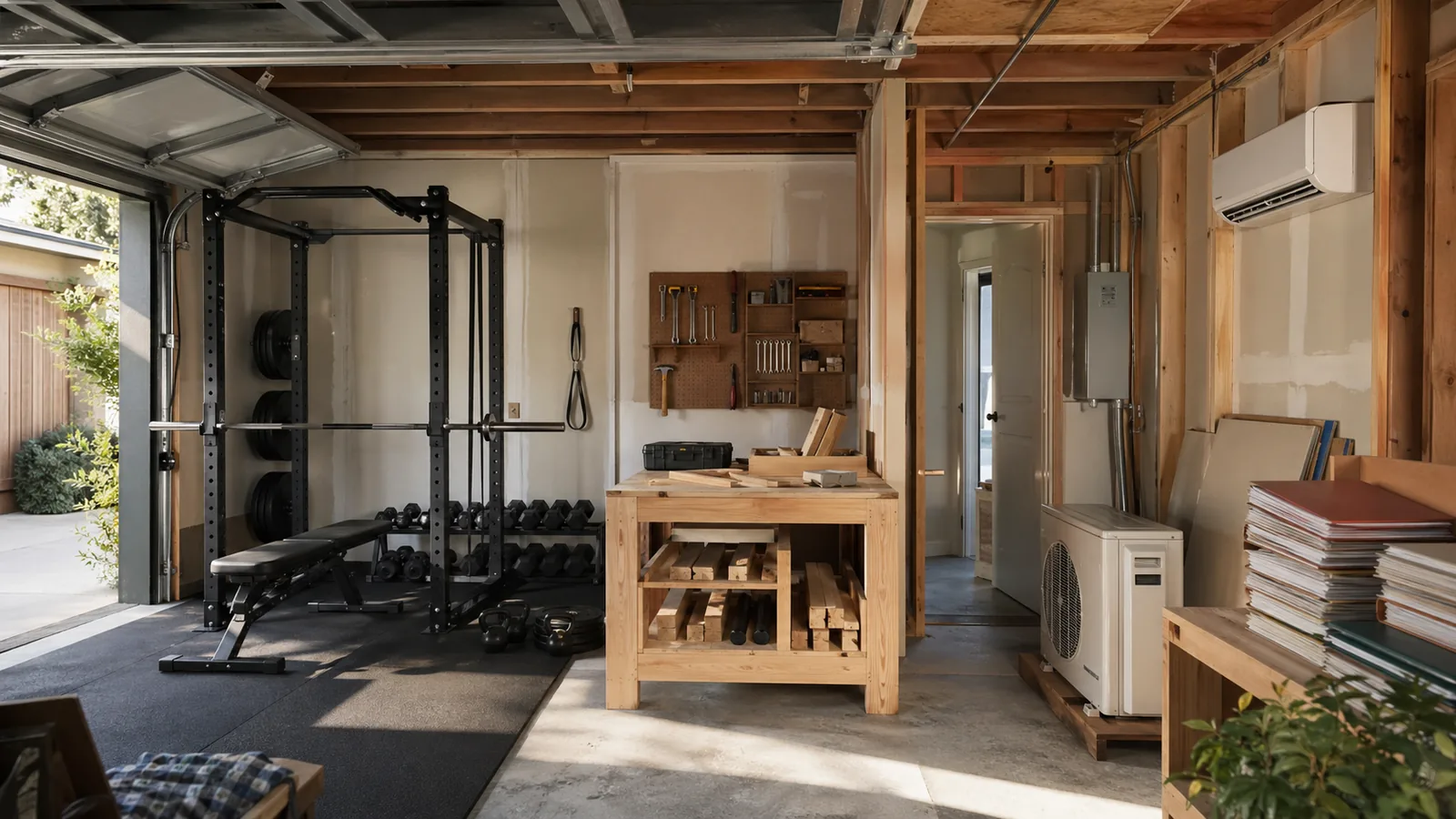
A finished gym conversion costs more than a workshop because comfort becomes non-negotiable. You're going to spend time in there at 6 a.m. in January and 6 p.m. in July, which means insulation and air sealing can't be a thin effort, and you almost certainly need active HVAC.
What pushes the gym budget above the workshop:
- Better insulation and air sealing: You'll want continuous insulation or dense-pack in addition to batts to reduce cold bridging through studs. The garage door itself is a major thermal liability — insulated steel panels with a thermal break (Clopay's Intellicore series, for example) or replacing the door with a wall are both valid options.
- HVAC: A single-zone mini-split heat pump from a manufacturer like Mitsubishi M-Series or Daikin Aurora is the standard choice for many garage gyms.
- Flooring: Rubber flooring over a slab moisture barrier is the gym standard. Rolled rubber (3/8"–3/4" thick) from suppliers like Rubber Flooring Inc. or RubberFlooringInc.com runs $1.50–$4 per square foot for material.
- Lighting and mirrors: Bright, even LED lighting matters in a gym. Budget for a well-lit space with a switched circuit and enough fixtures to avoid shadows near weights or a bench.
Watch Out: Skipping the slab moisture barrier under your gym floor creates a mold problem within two or three seasons in most US climates. Roll out 6-mil poly sheeting or a dimple mat before laying rubber flooring — it adds only a modest material cost and can save your floor investment.
ADU garage conversion cost
A legal ADU (accessory dwelling unit) — meaning a space that can be occupied, rented, and legally listed — is a different project category entirely. A garage ADU conversion is broader than a remodel because it adds the systems and approvals needed for habitable use, including plumbing, mechanical work, egress, and permit review.
Angi notes that permit requirements, garage door removal, and structural repairs all factor into the budget beyond what a simple remodel estimate captures — and an ADU triggers all three plus habitability systems that a workshop never touches.
The ADU scope adds:
- Full bathroom: Rough-in plumbing, a toilet, sink, and shower can significantly increase cost depending on how far the new drain lines must travel to tie into the existing sewer
- Kitchenette or full kitchen: Another major cost category depending on scope
- Egress windows: IRC R310 requires emergency escape and rescue openings in habitable sleeping rooms — a garage slab-on-grade with no existing windows may require new openings cut into the foundation or framing
- Fire separation upgrade: IRC R302.6 governs fire separation between an attached garage and the dwelling; an ADU may require additional upgrades depending on local amendments
- Mechanical systems to code: A full HVAC system, not just a mini-split, may be required in some jurisdictions for habitable space
- Planning approval and permits: In many cities, ADU approval adds fees and review steps before construction begins
DIY vs Pro: A workshop or gym conversion is manageable for an experienced DIYer on the non-electrical, non-structural scopes. An ADU conversion requires licensed contractors for electrical, plumbing, and HVAC — and usually a dedicated ADU contractor or design-build firm that knows how to navigate local planning approval, not a generalist remodeler.
What line items drive garage conversion costs the most?
The five systems that account for the biggest cost swings in any garage conversion are insulation, electrical, HVAC, plumbing, and permits. Understanding each one helps you spot an unrealistically low bid before you sign anything.
| Line Item | Workshop Range | Gym Range | ADU Range |
|---|---|---|---|
| Insulation & air sealing | $800–$2,500 | $1,500–$4,000 | $2,500–$6,000 |
| Electrical service/subpanel | $500–$2,000 | $1,500–$3,500 | $3,000–$8,000 |
| HVAC | None–$1,500 | $3,000–$6,500 | $5,000–$12,000 |
| Plumbing & bathroom | None | None–$2,500 | $8,000–$20,000 |
| Permits & plan review | $200–$800 | $300–$1,500 | $2,000–$10,000+ |
| Floor coating | $500–$2,500 | $1,000–$4,000 | $1,500–$5,000 |
These ranges are national estimates. Your local labor market, the existing condition of your garage, and your jurisdiction's code requirements will move every number.
Insulation and air sealing costs
Insulation is the highest-ROI spend in any garage conversion — it determines whether the space is usable year-round or just in mild weather. For walls, IRC Section R402.2 specific insulation requirements set minimum R-values by climate zone, but the practical target should come from your local code table and the way your garage is framed.
What this means in practice for a typical two-car garage (approximately 400–500 sq ft):
- Wall batts: Fiberglass or mineral wool batt in standard stud bays runs $0.40–$0.80 per square foot for material; blown-in dense-pack costs more but fills irregular cavities better
- Ceiling insulation: Blown-in fiberglass or cellulose in an attic space above the garage commonly lands in the same budget band as other light-envelope upgrades, depending on access and depth
- Garage door treatment: An existing single-layer steel door can be insulated with a retrofit foam kit (~$50–$100) for marginal gains; swapping to an insulated door (Clopay, Wayne Dalton, Amarr) with a thermal break is the right move for a gym or ADU
Don't overlook air sealing. Batt insulation without air sealing is like wearing a sweater with no windshirt — the R-value is nominal, not real. Budget $300–$700 for foam and caulk work around penetrations, the garage door threshold, and the man-door frame.
Pro Tip: In climate zones with colder winters, a 1-inch continuous rigid foam board (polyiso or XPS) on the interior side of the studs before drywall adds useful thermal resistance and reduces thermal bridging through the studs. It adds modest material cost and is one of the most cost-effective comfort upgrades you can make.
Electrical service and lighting upgrades
The existing garage circuit — usually one or two 20-amp circuits off a breaker in the main panel — is almost never enough for a gym or ADU. This is where electrical service upgrades become a real line item.
For a workshop, you may need: - 2–4 dedicated 20-amp circuits for tools (table saw, air compressor, dust collector each want their own circuit) - GFCI protection on all receptacles per NEC 210.8, which covers garage spaces as required by most adopted local codes - A 240V circuit for a welder or compressor if needed
For a gym, add: - A dedicated circuit for the mini-split - Adequate lighting circuits for 40–60 foot-candles of even illumination across the space
For an ADU: - A subpanel in the converted space is standard — it gives the unit independent circuit capacity and makes metering easier if you ever want to sub-meter for a tenant. - If the main panel is already near capacity, a full electrical service upgrade may be needed before the project can pass inspection.
Watch Out: Never accept a garage conversion quote that lists "electrical — allowance" without breaking out whether the allowance includes a subpanel, service upgrade (if needed), and all dedicated circuits. "Allowance" is the most common way contractors hide the gap between their low bid and the real cost.
LED lighting is the easy part. A 500 sq ft garage lit to gym standards needs roughly 8,000–12,000 lumens. Six 4-foot, 5,000K LED shop lights from a brand like Lithonia Lighting (DSXW or similar vapor-tight fixtures run $40–$80 each) gets you there for under $600 in fixtures.
HVAC, plumbing, and bathroom add-ons
HVAC is the single biggest cost delta between a gym and an ADU. A gym needs temperature control; an ADU needs a code-compliant mechanical system that a building inspector will sign off on.
Mini-split vs. ducted:
A ductless mini-split is the practical choice for most standalone garage conversions — no ductwork to install, no ceiling to fur down, and inverter-driven compressors deliver high efficiency. A single-zone mini-split handles most two-car garages up to about 500 sq ft in moderate climates. Installed cost varies by equipment size, line-set length, and labor conditions.
A ducted system makes sense only if you're tying the ADU into an existing home system (usually not feasible for a detached garage) or if local code requires a specific mechanical approach. Ducted installs in a standalone structure cost more because they add equipment, labor, and coordination.
Plumbing and bathroom: Adding plumbing is the clearest signal that your garage conversion has crossed into ADU territory. A half-bath (toilet and sink) requires running drain lines, supply lines, and a vent stack. A full bath with a shower adds more rough-in and finish scope. These figures can swing dramatically based on how far the new plumbing must travel to connect to your home's existing drain-waste-vent system.
Per Angi's guidance, bathroom additions in garage conversions are treated as triggers for additional permitting and inspection — not optional scope items you can defer.
Which code and permit rules can make an ADU conversion more expensive?
The headline averages you find for garage ADU conversions — "average $50,000" or "typical $60,000" — can be wildly inaccurate for your specific address. Local zoning, your jurisdiction's adopted code version, and your utility provider's requirements can all add or subtract tens of thousands of dollars from the scope.
When a workshop or gym becomes habitable living space
The legal threshold between a hobby space and living space isn't subjective — it's defined by your local building department, typically based on the IRC or an equivalent state residential code. Once a space is classified as "habitable," these requirements typically kick in:
Habitable space checklist:
- Ceiling height: Minimum heights are set by the adopted residential code, and garages often need more than drywall alone to meet them
- Egress window: IRC R310 requires emergency escape and rescue openings in habitable sleeping rooms
- Fire separation: IRC R302.6 requires a fire-resistance-rated separation between an attached garage and the dwelling; the specific requirement is typically 1/2" drywall on the garage side and 5/8" Type X on shared walls/ceilings — your jurisdiction may have stricter requirements
- Smoke and CO alarms: Required in each sleeping room, outside each sleeping area, and on each level of a dwelling unit
- Ventilation: Habitable rooms require mechanical or natural ventilation per IRC R303
- Finished surfaces: Floor, walls, and ceiling must be finished — bare concrete or exposed framing doesn't meet habitable standards
Watch Out: A garage gym with a pullout couch is still a "gym" to you, but if a building inspector decides someone could sleep there, it may be reclassified as a habitable room, which triggers all of the above. Be honest with your permit application about intended use.
Permit fees, plan review, and utility requirements
Permit fees for garage conversions are local and genuinely variable. A basic workshop remodel might require only a building permit in some cities. An ADU conversion can require:
- Building permit: Calculated by the jurisdiction based on project value or scope
- Plan review fees: Many jurisdictions charge separately for plan check
- Planning department/zoning review: If your ADU requires a zoning variance, conditional use permit, or owner-occupancy certification, add another layer of review and time
- Fire department review: Required in some jurisdictions for ADU conversions
- Utility upgrade fees: Your utility provider may require a separate electrical meter for a rental ADU, which means a new meter socket, utility work, and a possible upgrade fee
Before you get your first contractor bid, go to your city or county's building department website and pull the ADU checklist. Most jurisdictions now publish one. This single step will tell you exactly what plan submittals are required and give you the fee schedule.
Pro Tip: Many California, Oregon, and Washington jurisdictions have significantly streamlined ADU permitting since 2020 state-level ADU reform laws went into effect. If you're in the Pacific Northwest or California, check the current local rules — pre-2020 guidance online is often outdated and makes the process sound harder than it now is.
Why local ADU rules change the budget so much
The same 400 sq ft attached garage can cost very differently to convert to an ADU in one jurisdiction and the next city over. UpCodes confirms that states and cities routinely adopt and amend the model codes (IRC, NEC, IMC) independently, meaning the scope a building inspector will require is genuinely different depending on your address.
Specific factors that drive regional cost variation:
- Zoning requirements: Some cities require owner-occupancy of the primary residence; others allow investor-owned ADUs. Some require off-street parking replacement for every garage space converted.
- Setback and lot coverage rules: If your garage-ADU pushes total lot coverage over the municipal limit, you may need a variance — a public hearing process that adds months and legal fees
- Energy code stringency: California and other strict-code jurisdictions can require extra envelope and mechanical work compared with the baseline
- Fire sprinkler requirements: Some jurisdictions require residential fire sprinklers in new ADUs; in a garage conversion, this can mean running new supply lines and installing sprinkler heads throughout the space
- Utility service separation: Some utilities require separate meters for rental units; others don't
Verify your municipality's zoning code and your utility provider's ADU interconnection requirements before you solicit bids. An ADU contractor who works specifically in your market will know these requirements cold; a general remodeler may not, and you'll find out at the permit counter.
How do garage conversion quotes compare from contractors?
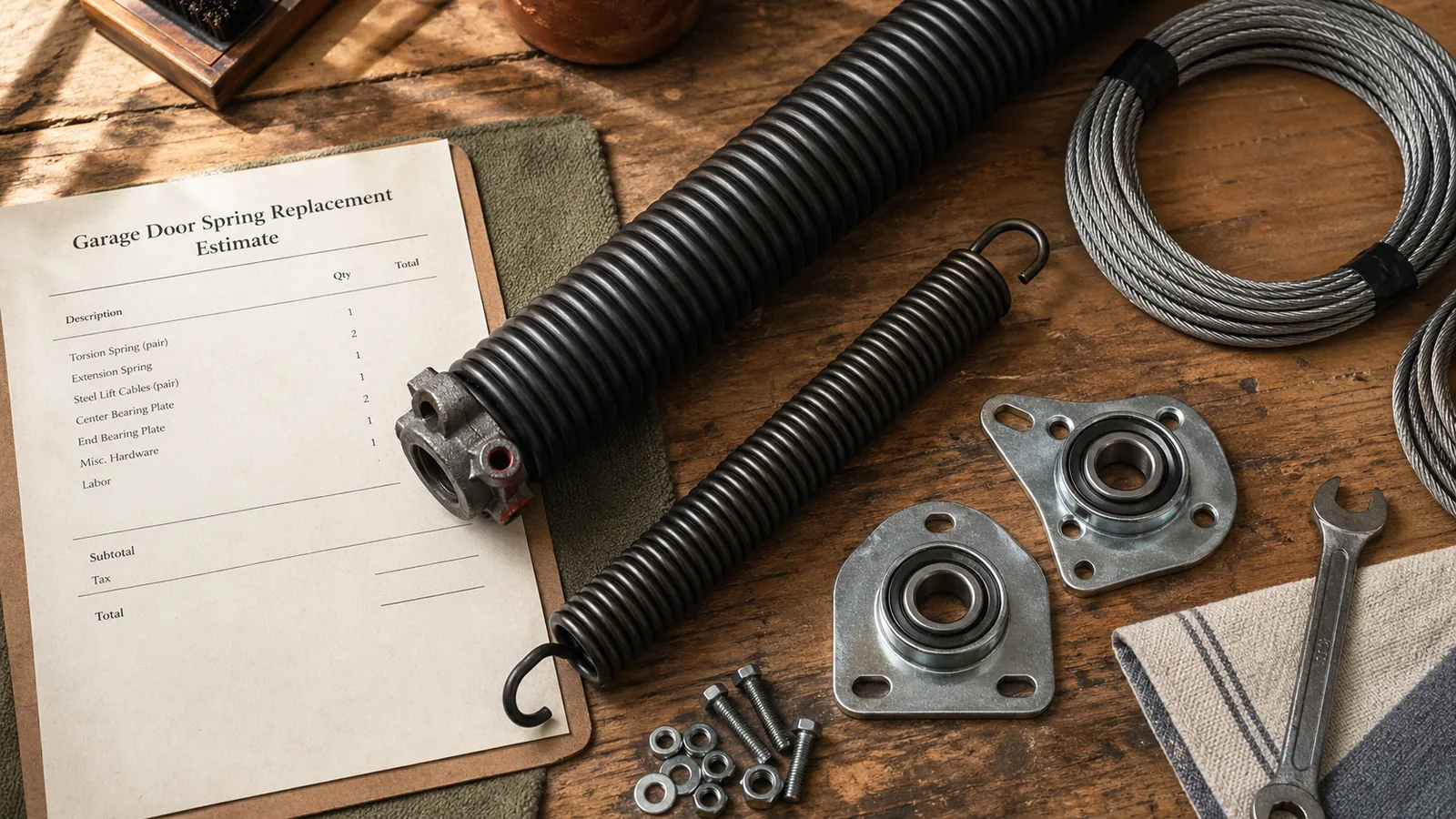
The most expensive mistake homeowners make when comparing garage conversion bids isn't picking the wrong contractor — it's comparing quotes that don't cover the same scope. A low ADU quote and a higher ADU quote might be for entirely different projects, with the low bid simply omitting permit fees, electrical service work, and plumbing rough-in.
What should a garage conversion quote include?
A complete garage conversion quote should break out each of these categories explicitly:
- Structural: Garage door removal and infill (framing, sheathing, siding, insulation), any beam or header work required, foundation repairs or slab treatment
- Electrical: Panel/subpanel work (including service upgrade if required), all circuit runs, outlet and switch rough-in, fixture installation, permit and inspection
- HVAC: Equipment, installation, ductwork or refrigerant line sets, electrical connection, permit and startup
- Plumbing: Rough-in, drain-waste-vent work, supply lines, fixture installation, permit and inspection (if applicable)
- Insulation and air sealing: R-values specified for walls, ceiling, and any floor treatment, plus air sealing scope
- Drywall and finish carpentry: Tape, mud, prime, paint, interior doors, window trim, base molding
- Flooring: Type, brand, and square footage clearly listed
- Permit and plan review fees: Itemized — not rolled into a contingency or excluded entirely
- Site work: Dumpster, demo, cleanup
DIY vs Pro: For workshop and gym conversions, you can legitimately split the project: hire a licensed electrician for the electrical work (usually required to pull permits), handle insulation and drywall yourself, and sub out flooring if needed. For an ADU, every licensed trade needs to be represented in the contract and the permits, or you'll have uninspected work that surfaces as a problem at sale.
Red flags that a quote is missing code work
Watch for these patterns in ADU contractor bids — each one has cost implications that will show up as a change order after you've signed:
- "Permits by owner" — This means you're responsible for pulling and managing all permits; if you don't know what's required, this is how projects stall or get built without required inspections
- "Electrical — allowance $X" without specifying whether the allowance includes a subpanel, a service upgrade, or just receptacles and lights
- No HVAC line item — Some contractors quote gym conversions without any mechanical cooling/heating, planning to value-engineer it out later; verify explicitly whether HVAC is in or out of scope
- "Plumbing stubbed only" — Rough-in without fixture installation, which means a separate contract and a second mobilization cost
- No egress or window specification — If the quote doesn't mention egress windows for a sleeping-room ADU, the contractor either hasn't checked the code or is expecting a change order when the inspector flags it
- Permit fees listed as "$TBD" or absent — Permit fees are knowable before a bid is submitted; any contractor who has done ADU work in your jurisdiction knows the fee schedule
When to Call a Pro: If a quote is missing two or more of the above items, don't try to negotiate them in. Start over with a contractor who scopes the project completely the first time.
Is a garage conversion worth it for a gym, workshop, or ADU?
A workshop or gym conversion is almost always worth it if you'll actually use the space — the cost is modest relative to what you get, and a well-done conversion adds resale appeal even if it's not a habitable room. An ADU conversion is the most financially significant decision of the three: done well in the right jurisdiction, a garage ADU can add flexibility for family use or long-term rental potential; done poorly or without proper permits, it can complicate a home sale.
Cheapest garage conversion options that still feel finished
The lowest-cost path to genuinely usable space — one that doesn't feel like a cold concrete box — follows this upgrade ladder:
- Air seal and insulate the walls and ceiling: This single step transforms the thermal character of the space more than anything else
- Add LED shop lighting on a switched circuit: Bright, even light makes a garage feel like a real room
- Apply a slab moisture barrier and floor coating: A clean floor changes the whole perception of the space
- Add a dedicated 20-amp circuit or two with GFCI outlets: Safely powers tools, a mini-fridge, or fitness equipment
- Install a 240V outlet for a portable electric heater or small mini-split: Enough for seasonal use without a full HVAC installation
This ladder gets a two-car garage to functional workshop or entry-level gym territory without jumping straight into ADU-level mechanical and plumbing work.
Pro Tip: If you're not ready to commit to a full conversion, start with air sealing and insulation. It's the one upgrade that benefits every future use — workshop, gym, or ADU — and you'll never regret having done it.
When to hire an ADU contractor instead of a general remodeler
The project crosses into specialist territory the moment any of these conditions apply:
- You need planning approval or a zoning variance — an ADU contractor or ADU-specialist design-build firm understands the entitlement process; most general remodelers don't
- The project requires a full electrical service upgrade — a licensed electrician is required, and the ADU contractor should be coordinating that scope rather than treating it as your problem to manage separately
- The space needs to be legally habitable and rentable — code compliance on egress, fire separation, mechanical, and plumbing must be permit-documented; uninspected work on a rental unit creates liability
- You're in a jurisdiction with complex ADU rules — lot coverage limits, owner-occupancy requirements, parking replacement mandates — that require someone who has successfully permitted projects in your specific city
A general remodeler who has never done an ADU might be skilled at trim carpentry and drywall, but they won't know whether your jurisdiction requires a fire sprinkler system or a separate utility meter until they're already mid-project. An ADU-specialist contractor prices those items into the original bid because they've done this before in your market.
Garage conversion FAQs
Do you need a permit to convert a garage into a gym or workshop?
It depends on the scope. A basic cosmetic upgrade — painting walls, coating the floor, adding shelves — typically doesn't require a permit. But any work that involves the electrical system (new circuits, outlets, subpanel), structural changes (removing the garage door and framing a wall), or HVAC installation almost always requires a building permit and inspection. When in doubt, call your local building department before starting — unpermitted electrical and structural work can complicate homeowners insurance claims and property sales.
How much does it cost to convert a garage into an ADU?
A garage-to-ADU conversion costs as much as the scope requires: more than a simple remodel, because you are adding habitable-space requirements, permits, and licensed-trade work. Your actual number depends on whether the garage is attached or detached, your local jurisdiction's code requirements (egress, fire separation, energy code, sprinklers), how far plumbing must run to tie into existing lines, and what permits and planning approvals your city requires. Get at least three itemized bids from contractors who have specifically completed ADU conversions in your municipality.
What is the cheapest way to convert a garage?
The cheapest finished-space conversion follows the workshop path: insulate, add good lighting, seal the slab, apply a floor coating, and add a dedicated electrical circuit. Done carefully, you can have a comfortable, functional space without moving into HVAC, plumbing, or egress work. Skipping those systems keeps the project out of habitable-space code territory and eliminates the largest cost drivers. If you want it to feel like a room but don't need it to legally be one, this is the path.
Can you convert a garage into livable space?
Yes, but "livable" has a specific legal meaning that requires meeting habitability standards — minimum ceiling height, egress windows per IRC R310, ventilation, smoke and CO alarms, finished surfaces, and in attached garages, the fire separation requirements of IRC R302.6. A space that meets those standards can be legally occupied. A space that doesn't might be comfortable to hang out in, but you can't legally rent it or list it as a bedroom. If legal habitability is the goal, the project is an ADU conversion, not a remodel — and it needs to be permitted and inspected as such.
What increases the cost of a garage conversion the most?
Plumbing is usually the biggest single cost spike — adding a bathroom requires running drain lines, supply lines, and a vent stack, and the further those lines need to travel, the more they cost. Electrical service upgrades are second: if your main panel is at capacity or undersized, upgrading it adds a major line item before a single ADU circuit is run. After those two, local jurisdiction requirements (fire sprinklers, separate meters, zoning variances) can add more cost than any physical construction item.
Sources & References
- GatherADU — How much does it cost to convert a garage to an ADU in Valley Glen — Primary competitive benchmark and ADU cost framework source
- Angi — How Much Does It Cost to Remodel a Garage? — National garage remodel cost range and permit/scope guidance
- Fixr — Garage Remodeling Cost — Average two-car garage remodel cost with cabinet storage and floor coating
- ICC — IRC 2021 Section R310: Emergency Escape and Rescue Openings — Egress window requirements for habitable rooms
- UpCodes — IRC 2021 Chapter 3, Building Planning (R302.6 Fire Separation) — Dwelling-garage fire separation requirements
- UpCodes — IRC Section R402.2 Specific Insulation Requirements — R-value requirements by climate zone
- UpCodes — Building Codes Online by Jurisdiction — Jurisdiction-specific code adoption and amendment reference
Keywords: garage conversion, ADU contractor, electrical service upgrade, NEC 210.8 GFCI, IRC R302 fire separation, IRC R310 egress window, R-13 wall insulation, R-30 attic insulation, mini-split heat pump, subpanel, permit fees, planning approval, zoning review, slab moisture barrier, epoxy floor coating