Back pain doesn't wait until morning to remind you your mattress is wrong — it wakes you at 2 a.m. and follows you to the coffee maker. The good news: choosing the right mattress type removes a genuine aggravating factor for most people. The harder news: "best mattress for back pain" is not a single answer. It depends on whether you sleep on your side or back, how much you weigh, whether you sleep hot, and which type of pain you're dealing with.
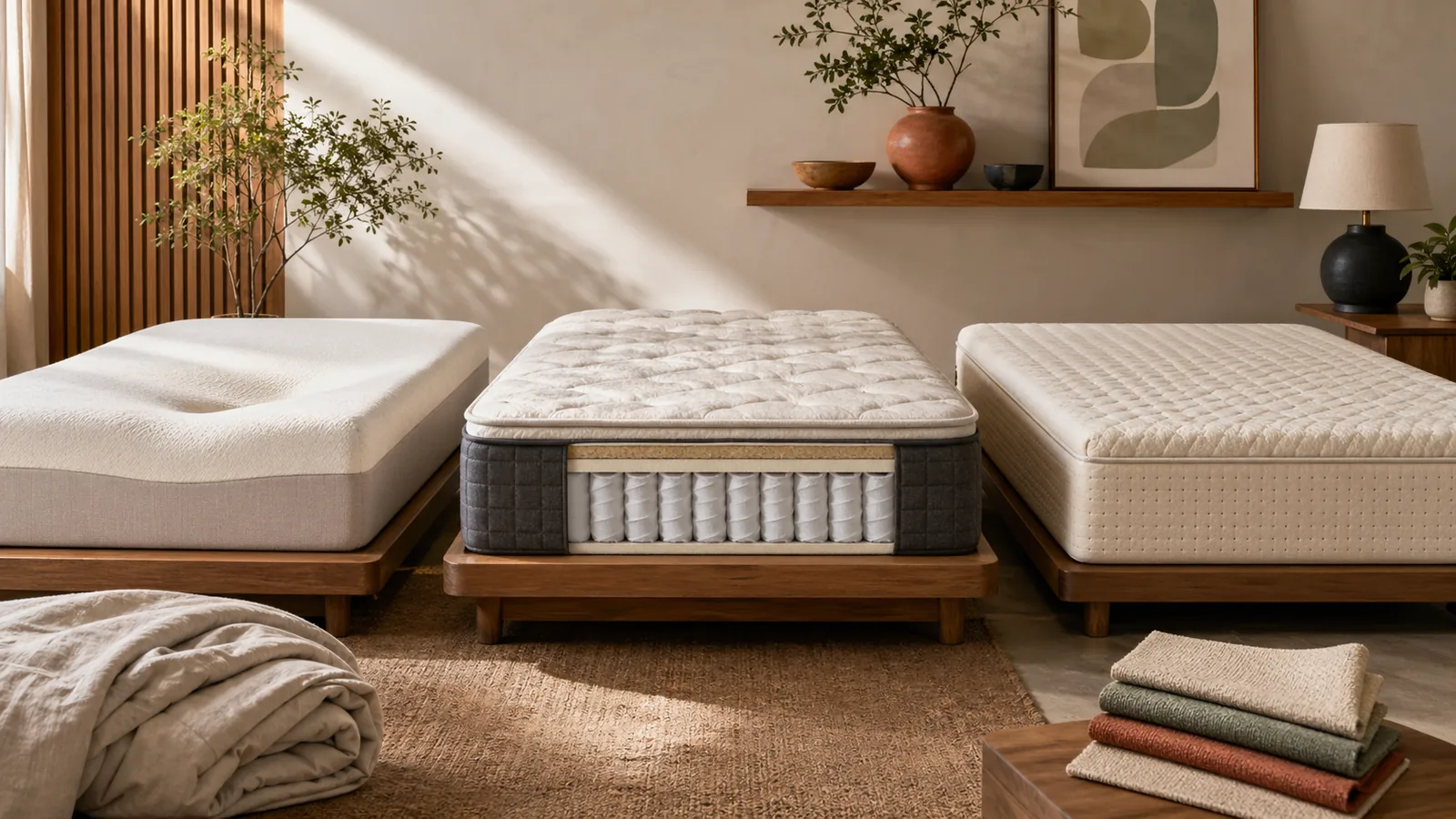
Here's the short version before we get into the weeds: hybrids win most head-to-head comparisons for back pain because pocketed coils provide zoned support while foam comfort layers cushion pressure points. Memory foam is the best pure pressure-reliever and costs less. Latex is the most responsive and the most durable, with naturally better airflow than dense foam. Read on to find out which is right for your specific situation.
Which mattress type is best for back pain: memory foam, hybrid, or latex?
For back pain, the mattress that keeps your spine in a neutral position while cushioning your hips and shoulders is the one that will actually help. As Sleep Foundation puts it: "People with back pain need a mattress that offers optimal spinal support and pressure relief." Those two needs — support and pressure relief — are often in tension, which is why mattress type matters so much.
Memory foam excels at pressure relief and motion isolation but can trap heat and lacks the responsive bounce that helps you reposition without effort. Hybrids pair a pocketed coil core with foam comfort layers, delivering both support and cushioning — Sleep Foundation's 2026 testing named the Silk & Snow Hybrid as its best mattress for back pain, describing it as "a well-rounded bed made of foam and a pocketed coil core" that gives "strong cushioning along the spine without sacrificing support for healthy sleep posture." Latex (natural rubber, not foam) is springy, durable, and sleeps cooler than memory foam, making it a go-to for shoppers who want a more responsive feel.
None of these is universally best — but hybrids are the safest starting point for most back-pain shoppers because they balance the two properties that matter most.
How we compared memory foam vs hybrid vs latex for back pain
The criteria in this guide mirror the industry-standard evaluation framework used by Sleep Foundation, whose team has tested more than 2,000 beds across six core dimensions: pressure relief, temperature regulation, edge support, motion isolation, durability, and value. Their back-pain roundup specifically tested 75 mattresses and folded in expert testing alongside consumer feedback to shape the recommendations in that guide. That's the methodological bar this guide is built around.
For each mattress type below, we assess how the construction — materials, coil systems, foam density — affects each of those six criteria when applied to a back-pain sleeper. We also factor in sleeper weight and position because those two variables change the ideal firmness, depth of contouring, and level of support more than any marketing claim.
Why spine alignment matters more than mattress feel alone
"Soft and comfortable" is not the same as "good for your back." A mattress that feels plush in the store may let your hips sink too deep, arching your lower spine and compressing the lumbar discs. A mattress that feels firm and supportive may leave your shoulder bridge-loading your upper back in side-sleeping.
Neutral spine alignment means your vertebrae stack in roughly the same position they'd hold if you were standing with good posture — no exaggerated arch, no flattening. For a back sleeper, that means the mattress should fill the lumbar gap (the natural inward curve of your lower back) rather than letting it hang unsupported or forcing it flat. For a side sleeper, it means hips and shoulders sink evenly so the spine doesn't tilt laterally. Feeling supported while feeling comfortable is the double standard your mattress has to meet.
When medium-firm is the safest starting point
Medium-firm — roughly a 6 on a 10-point firmness scale where 10 is concrete — is the default recommendation for most back-pain shoppers, and for good reason. Sleep Foundation's back-pain guide notes that the top-performing options typically offer "either multiple firmness options or a medium-firm feel" with above-average ratings across most sleeper-weight and sleep-position combinations.
The practical rule of thumb:
- Under 130 lbs, side sleeping: Consider medium (not medium-firm). Lighter bodies don't compress foam deeply enough on a medium-firm bed to get proper hip contouring. Sleep Foundation's side-sleeper data confirms that "side sleepers under 130 pounds generally prefer softer mattresses, while most prefer medium-firm."
- 130–230 lbs, any position: Medium-firm is the sweet spot for many sleepers in this range.
- If you want more support than contouring: Lean firmer within the medium-firm range, or choose a hybrid or latex where the support core resists excessive sink-through over time.
If your current mattress feels like a hammock — you can feel yourself slumping into a U-shape — go firmer. If it feels like sleeping on a table — you wake with shoulder or hip soreness on the contact side — go softer.
Memory foam vs hybrid vs latex: comparison table for back pain
The table below covers the attributes that matter most for back-pain sleepers.
| Attribute | Memory Foam | Hybrid | Latex |
|---|---|---|---|
| Firmness range | Soft to firm; medium-firm most common | Soft to firm; wider range available | Medium to firm; limited very-soft options |
| Pressure relief | Excellent — deep contouring | Good — foam layers over coil support | Good — buoyant rather than enveloping |
| Bounce / responsiveness | Low — slow recovery | Moderate to high | High — snaps back quickly |
| Cooling | Below average (dense foam can feel warm) | Moderate (coils allow airflow) | Above average (open-cell structure) |
| Motion isolation | Excellent | Good (pocketed coils help) | Fair — bounce transfers more motion |
| Edge support | Fair to good | Good to excellent | Good |
| Durability | 6–8 years typical | 8–10 years typical | 10–15 years typical |
Pro Tip: If you're torn between two types, a hybrid with a medium-firm feel usually delivers the broadest overlap of the criteria above — which is why it keeps landing at the top of independent back-pain testing lists.
Memory foam mattresses for back pain
Memory foam — technically high-density polyurethane foam — contours closely to your body shape, making it the best option when pressure relief is the dominant need. If you have hip bursitis, shoulder impingement, or a pain pattern that lights up at contact points, memory foam's slow-recovery cradle can reduce that localized pressure more effectively than other materials.
The trade-offs are real: dense foam often sleeps warmer than coil-based beds because its structure limits airflow. Most manufacturers now add gel infusions, copper particles, or perforations to soften that feel, but the material still tends to hold more warmth than a bed with a ventilated coil core. Memory foam also has the lowest bounce, which means repositioning at night — rolling from back to side, for example — requires more effort. For back-pain sleepers who already move carefully, that can be a meaningful frustration.
Memory foam shines for: side sleepers with hip or shoulder pain, couples where one partner is a light sleeper (excellent motion isolation), and anyone prioritizing price-per-performance ratio.
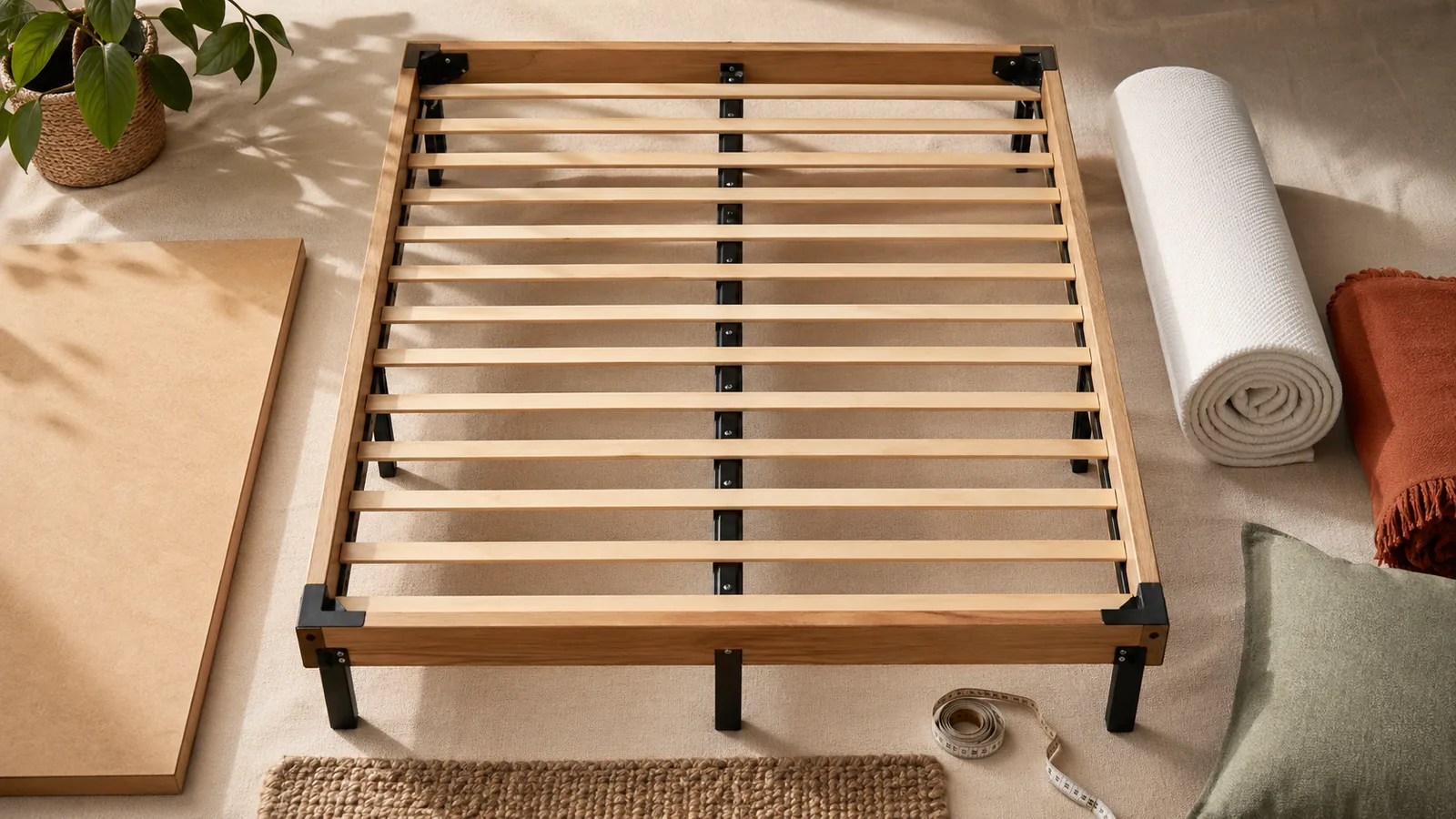
Watch Out: Memory foam mattresses require a firm, solid support surface to maintain their shape and keep your warranty valid. Casper, for example, states that its mattresses are designed to work on a firm, solid surface like a foundation, platform, or adjustable bed frame — not a sagging box spring or a slatted base with gaps wider than 3 inches.
Hybrid mattresses for back pain
A hybrid combines a pocketed coil support core — individual springs wrapped in fabric so they move independently — with one or more foam comfort layers on top. That construction is why hybrids consistently outperform on the support-plus-cushioning balance that back-pain relief requires.
The Silk & Snow Hybrid is Sleep Foundation's top-tested pick for back pain in 2026 precisely because of this design: the coil core delivers zoned lumbar support while the contouring foam layers address shoulder and hip pressure. Sleep Foundation says the model is "a well-rounded bed made of foam and a pocketed coil core," and the same review notes that it "performs well in this category because of its contouring foams that isolate vibrations from movement" — useful not just for motion isolation but for the micro-adjustments you make all night long.
Pocketed coils also allow air to circulate through the mattress core in a way that solid foam cannot, which is why hybrids are often a practical pick for sleepers who notice heat buildup in all-foam beds. Edge support is generally stronger in hybrids too, which matters if you sit on the edge of the bed to dress or if you sleep close to the perimeter.
The main hybrid trade-off is price: expect to pay more than an equivalent all-foam bed, and somewhat less than a high-end latex. For most back-pain shoppers comparing types side by side, a hybrid in the medium-firm range is the most logical starting point.
Latex mattresses for back pain
Latex is made from natural rubber (per Saatva's material definition), not polyurethane foam — a distinction that matters for both feel and longevity. Natural latex is springy rather than contouring; it pushes back against your body rather than wrapping around it. That responsiveness makes repositioning effortless and prevents the "stuck in the mattress" feeling some sleepers dislike about memory foam.
Two latex processing methods produce different feels: Dunlop is denser and slightly firmer, while Talalay is lighter and more consistent in feel, with a slightly plusher surface. The Birch Natural Mattress is one example combining pocketed coils with Talalay latex, which Sleep Foundation notes earns a strong durability score "thanks to its construction and natural materials."
Durability is latex's clearest structural advantage: expect 10–15 years from a quality all-latex or latex-hybrid bed versus 6–8 years from memory foam. The open-cell structure of natural latex also provides better airflow than dense foam, which benefits hot sleepers meaningfully. The cost of that durability and airflow: latex is the most expensive category, and some people find the bouncy feel less supportive-feeling despite technically excellent lumbar support.
Best mattress type for your sleep position and body weight
Sleep position and body weight interact with mattress type more than any other variable. A medium-firm hybrid that works perfectly for a 180-lb back sleeper may feel too firm for a 115-lb side sleeper and too soft for a stomach sleeper who needs a more rigid surface.
| Sleeper Profile | Best Type | Firmness | Priority |
|---|---|---|---|
| Side sleeper, under 130 lbs | Memory foam or soft hybrid | Medium to medium-soft | Hip/shoulder pressure relief |
| Side sleeper, 130–230 lbs | Hybrid or memory foam | Medium-firm | Balance of contour + support |
| Back sleeper, under 130 lbs | Memory foam or hybrid | Medium | Lumbar fill, not excess firmness |
| Back sleeper, 130–230 lbs | Hybrid | Medium-firm | Lumbar support + coil base |
| Stomach sleeper, any weight | Firm hybrid or latex | Firm | Prevent hip sag |
| If you need a firmer feel | Hybrid or latex | Medium-firm to firm | Durability + deep support |
Side sleepers with hip pain need more contouring
When you sleep on your side, your hip and shoulder are your primary contact points. If the mattress is too firm, those joints bridge over the surface and absorb pressure rather than sinking in — which is how people wake with hip bursitis flares or shoulder aches after a full night's sleep.
Side sleepers with hip pain generally need a comfort layer deep enough to let the hip sink while the mattress supports the waist. Memory foam does this best at any price point. A hybrid with a 2- to 3-inch foam comfort layer accomplishes the same thing with better edge support and more responsiveness. According to Sleep Foundation's side-sleeper research, most side sleepers prefer medium-firm, but those under 130 lbs often need a softer feel because lighter bodies don't compress a medium-firm surface enough to get proper hip contouring.
If you're a side sleeper who already has a supportive mattress but needs more surface cushioning, a memory foam mattress topper (2–3 inches, medium density) can add that contouring layer without a full mattress replacement.
Back sleepers usually need firmer lumbar support
Back sleepers put their load mostly on the sacrum and lumbar region. The risk isn't pressure at contact points — it's the lumbar gap. If the mattress is too soft, the lower back flattens or the hips sag, loading the lumbar spine in a flexed position all night.
A medium-firm hybrid or latex bed tends to work best for back sleepers because it is firm enough to prevent hip sag, with just enough foam or latex cushioning to fill the lumbar curve rather than bridge it. Lighter back sleepers (under 130 lbs) often do well on a medium feel; their lighter load means a medium-firm surface can feel unnecessarily rigid.
Stomach sleepers should avoid excessive sink
Stomach sleeping is mechanically the hardest position to accommodate, and it's the one most likely to aggravate back pain regardless of mattress. When the hips sink deeper than the chest and shoulders, the lumbar spine arches sharply — the equivalent of holding a backbend all night.
For stomach sleepers, firmness is more important than cushioning. A firm hybrid or Dunlop latex prevents the hip-sink pattern. Memory foam in medium or softer firmness is generally the wrong choice for stomach sleepers with back pain: even if it feels comfortable initially, the gradual sink that develops over hours of pressure is enough to create lumbar strain. If you're a dedicated stomach sleeper and your back hurts, upgrading to a firmer surface is the single most impactful mattress change you can make.
How body weight changes the best mattress choice
Body weight changes how deeply you compress any mattress — and therefore whether you're getting the contour and support the manufacturer designed for.
Under 130 lbs: Lighter sleepers don't compress foam or latex deeply enough to activate the full support core of a medium-firm mattress. They often feel "on top of" the mattress rather than in it, which can mean less pressure relief at the hip and shoulder. Memory foam in medium or medium-soft, or a hybrid with a plush comfort layer, typically works better than a firm model.
Above that range: Heavier sleepers compress deeper into any foam layer, which means a mattress that feels medium-firm initially may start feeling too soft after a few months as the foam compresses. Hybrids and latex hold up better under sustained heavier loads. Look for a hybrid with a sturdy coil unit and high-density comfort layers, or an all-latex bed — both resist permanent indentation better than memory foam over the long term.
Cooling, bounce, and motion isolation: what matters if you sleep hot or share the bed
Temperature regulation, responsiveness, and motion isolation don't change which mattress is medically better for your back — but they determine whether you'll actually keep the mattress through the trial period. All three are standard criteria in Sleep Foundation's mattress evaluation framework, and all three vary by mattress design and build quality.
Quick comparison:
- Cooling: depends heavily on construction and materials
- Bounce / responsiveness: higher in latex, moderate in hybrids, lower in memory foam
- Motion isolation: typically strongest in memory foam
If you sleep hot and share the bed with a restless partner, those trade-offs matter. A cooling mattress protector or breathable bamboo sheets can help if you love a foam mattress's pressure relief but hate its warmth.
Hot sleepers: why latex or ventilated hybrids usually run cooler
Dense memory foam can retain warmth because its structure limits airflow. In a hybrid, the pocketed coil core creates space under the comfort layers that can improve ventilation as you move.
Manufacturers address foam's heat-retention problem with gel infusions and perforations. The Silk & Snow Hybrid's medium-firm model, for example, uses gel-infused foams specifically to counteract heat buildup — though Sleep Foundation's review rates it as roughly average for temperature control overall. Gel infusions help, but they do not eliminate warmth for every sleeper.
If you consistently sleep hot and have back pain, temperature control deserves attention alongside support and pressure relief.
Restless partners: why motion isolation can outweigh bounce
If your partner gets up at 3 a.m. or tosses frequently, motion transfer from the mattress will wake you whether or not your back hurts. Memory foam absorbs movement most effectively — its slow-recovery structure doesn't propagate vibration across the surface. Latex, by contrast, is springy enough that a partner's movement sends a small wave through the bed.
Hybrids land in the middle. Pocketed coils move independently, which reduces cross-bed transfer compared with an older innerspring, but foam layers are doing most of the motion-damping work. The Silk & Snow Hybrid, per Sleep Foundation's testing, "isolates motion to prevent sleep disturbances when your partner switches positions or gets in or out of bed" — a tested result, not a marketing claim. Not all hybrids perform equally, so check independent reviews for the specific model you're considering.
Queen-size price bands, sizes, and what back-pain buyers can expect to pay
US mattress sizes from Twin to Cal King
Before you order, confirm your frame dimensions. Standard US mattress sizes are:
| Size | Width × Length |
|---|---|
| Twin | 38" × 75" |
| Twin XL | 38" × 80" |
| Full | 54" × 75" |
| Queen | 60" × 80" |
| King | 76" × 80" |
| California King | 72" × 84" |
Queen — 60 × 80 inches — is the most common size for couples and the size most mattress reviews use as a reference point. Twin XL is the same length as a queen and king, which matters if you're 6'2" or taller. California king trades width for 4 extra inches of length.
All dimensions sourced from Sleep Foundation's sizing guides.
Typical Queen price ranges by mattress type
These are approximate retail ranges based on widely listed prices from major US mattress brands as of April 2026. Sales and promotional discounts are common and can reduce these figures by 20–30%.
| Type | Budget | Mid-Range | Premium |
|---|---|---|---|
| Memory foam | Pricing varies by brand and build | Pricing varies by brand and build | Pricing varies by brand and build |
| Hybrid | Pricing varies by brand and build | Pricing varies by brand and build | Pricing varies by brand and build |
| Latex | Pricing varies by brand and build | Pricing varies by brand and build | Pricing varies by brand and build |
Pro Tip: Build quality matters significantly for long-term value. A $900 hybrid with quality pocketed coils and CertiPUR-US–certified foam will outlast and outperform a $600 all-foam bed by several years — making the per-year cost of the more expensive option lower in practice.
Memory foam offers the lowest entry price for back-pain relief. Hybrids cost more but typically last longer and sleep cooler. Latex costs the most upfront but has the longest lifespan, making it the best total-cost option if you keep mattresses for a decade or more.
When to choose memory foam, hybrid, or latex for back pain
Use this section as your final decision filter. Start with your dominant pain pattern and sleep position, then layer in heat and budget.
Choose memory foam if pressure relief is your top priority
Memory foam — constructed from high-density polyurethane foam — is the right call when you have acute or chronic pressure-point pain: hip bursitis, shoulder pain from side sleeping, or general joint sensitivity. Its close-contouring feel distributes weight evenly across the contact surface, reducing the localized pressure that aggravates those conditions.
Memory foam also wins on motion isolation and price. If you or your partner is a light sleeper and you're working with a budget under $1,000 for a queen, a medium-firm memory foam mattress from a reputable brand delivers more performance per dollar than an entry-level hybrid.
The caveat: if you sleep hot or dislike the "in the mattress" feeling, memory foam will fight you. In that case, adding a ventilated latex or gel-foam mattress topper can adjust the surface feel without replacing the entire mattress.
Choose a hybrid if you want the safest all-around balance
A hybrid is the right choice for most back-pain shoppers because it doesn't force a trade-off between support and comfort. The pocketed coil core provides reliable lumbar support — the structural backbone your spine needs — while the foam or latex comfort layer cushions the hips and shoulders. As Sleep Foundation describes the Silk & Snow Hybrid: "This balanced design is a good fit if you seek strong cushioning along the spine without sacrificing support for healthy sleep posture, even if you frequently switch positions at night."
Hybrids are particularly well-suited to combination sleepers, couples with different firmness preferences, and shoppers who want a sturdy coil base under their comfort layers. If you're uncertain which type to choose, start here. The Silk & Snow Hybrid is a well-tested option at a mid-range price point; Saatva's Classic and WinkBed are also strong hybrid options with multiple firmness levels.
Choose latex if you want responsiveness and better airflow
Latex makes the most sense if you prioritize three things: cooling, responsiveness, and longevity. Natural latex — made from rubber tree sap rather than polyurethane — has an open-cell structure that breathes better than foam. Its springy, buoyant feel makes repositioning effortless, which matters for anyone with back pain who wakes stiff and needs to shift positions frequently. And natural latex beds routinely last 10–15 years, meaning the higher upfront cost amortizes well.
Saatva's Zenhaven is a well-known all-latex option; Birch Natural is a latex-hybrid that combines Talalay latex with pocketed coils, earning strong durability ratings from Sleep Foundation. If you run warm at night, have been dissatisfied with the heat retention of previous foam mattresses, and can invest in the higher end of the market for a queen, latex deserves serious consideration.
Trial periods, return shipping, and warranty basics before you buy
Most online mattress brands now offer sleep trials ranging from 100 nights to a full year. That trial window is where you should actually evaluate back-pain improvement — not in the first week. Your body needs time to adjust to a new sleep surface.
Casper, for example, offers a 100-night trial and is explicit that "it can take the body 30 nights to adjust to a new mattress." Their policy: "If you're not 100% in love after the first 30-Night Adjustment Period, returns are free and easy." That 30-night minimum before initiating a return is worth noting — commit to giving any new mattress at least a month before judging whether your back pain has improved.
For context, 100-night trials are a common industry benchmark. Some brands offer longer trial windows as well, and those can be useful if you need more time to settle in before making a final call.
Why the foundation matters for warranty compliance
Your mattress warranty is contingent on using a proper support surface. As Casper's FAQ states: "Casper mattresses are designed to work on a firm, solid surface like our foundation, platform, or adjustable bed frame." That same principle applies across virtually every major mattress brand. Place a foam or hybrid mattress on a sagging box spring or a slatted platform with gaps wider than the manufacturer specifies, and you may void the warranty while also accelerating foam breakdown — which will worsen, not help, your back pain.
Verify your specific mattress brand's foundation requirements before purchase. Platform beds with solid or closely-slatted surfaces are the safest universal choice. Adjustable bed frames are compatible with most foam and hybrid mattresses — check the brand's spec sheet to confirm.
What to check in the fine print before the return window closes
Before you buy, look for answers to these four questions in the brand's trial and return policy:
- Who pays return shipping? Some brands offer free pickup; others require you to arrange donation or disposal, which can cost $50–$150 for a queen mattress. Casper describes returns as "free and easy," but verify current terms at checkout — policies update.
- Is it a refund or an exchange? Some trials offer only a one-time exchange to a different firmness, not a full cash refund. Know this before you commit.
- What counts as "used" or ineligible for return? Most brands require a mattress protector to be in use. Stains or damage typically void return eligibility.
- Where does the warranty apply? Casper's limited mattress warranty covers purchases "located in the United States (not including US territories) or Canada" made through Casper or an authorized retailer. Regional limits like these are common and worth confirming for any brand.
Watch Out: The trial clock usually starts on the delivery date, not when you first sleep on the mattress. If your delivery is delayed or you're traveling, you may lose trial days. Confirm the start date with the retailer.
When back pain needs a doctor or physical therapist instead of a new mattress
A new mattress can reduce pain from a sleep-surface problem. It cannot fix a structural issue, a herniated disc, nerve compression, or inflammatory disease. If you're shopping for a mattress primarily because back pain is disrupting your sleep, it is worth making sure the pain is actually mattress-related before spending $1,000–$3,000.
If you have pain that is severe, persistent, or paired with numbness, tingling, weakness, radiating leg pain, fever, unexplained weight loss, or bowel/bladder changes, you should seek medical evaluation from a doctor or physical therapist rather than trying to solve it with a new bed. Pain after a fall, accident, or trauma also deserves prompt evaluation.
A physical therapist can assess whether the pain is muscular, postural, or structural — and give you targeted exercises that address the root cause. A mattress addresses the sleep environment; a PT addresses your body. Both may be necessary, but neither replaces the other.
FAQ: best mattress for back pain, firmness, and mattress type
What type of mattress is best for back pain?
Hybrids are the best starting point for most back-pain sleepers because pocketed coils provide lumbar support while foam comfort layers relieve pressure at the hips and shoulders. Memory foam is better if pressure relief is the primary concern and cooling is less important. Latex is better if you sleep hot, want a more responsive feel, or plan to keep the mattress for a decade or more.
Is memory foam or hybrid better for back pain?
For most sleepers in the 130–230 lb range, a hybrid in medium-firm is the stronger choice: it delivers comparable pressure relief to memory foam while adding better lumbar support, edge support, and airflow. Memory foam wins on motion isolation and price. If you share a bed with a restless partner and budget is a constraint, a well-made memory foam mattress in medium-firm is a legitimate option.
Are latex mattresses good for back pain?
Yes — particularly for back and stomach sleepers, heavier sleepers, and hot sleepers. Latex's buoyant support prevents the hip-sag that aggravates lumbar pain, and its open-cell structure sleeps cooler than foam. Dunlop latex is firmer and better suited to back and stomach sleepers; Talalay latex is slightly softer and more consistent, better for side sleepers. The trade-off is price: quality latex beds start around $1,200 for a Queen and increase from there.
What firmness is best for back pain?
Medium-firm is the safest default for most back-pain shoppers — confirmed by Sleep Foundation's 2026 back-pain testing, which found top-performing mattresses typically offered "either multiple firmness options or a medium-firm feel." Exceptions: side sleepers under 130 lbs often need medium or medium-soft to get proper hip contouring; stomach sleepers and heavier back sleepers generally need the firmer end of medium-firm.
How long should you try a mattress before returning it?
Give it at least 30 nights before evaluating. As Casper notes: "We believe you should sleep on your mattress to decide if you like it and that it can take the body 30 nights to adjust to a new mattress." Most brands offer 100-night trials; some go longer. Use the full adjustment period — back pain improvement from a mattress change is often gradual, not immediate.
Does my bed frame affect whether a mattress helps my back?
Yes. An unsupportive foundation — sagging box spring, slatted base with wide gaps, or a frame that flexes — can undermine even a high-quality mattress. Use a firm, solid platform, a properly slatted foundation, or an adjustable base compatible with your mattress type. Check the brand's warranty documentation to confirm which support bases are approved; using an incompatible base can void coverage.
Sources & References
- Sleep Foundation — Best Mattress for Back Pain — 75-mattress tested roundup with back-pain-specific evaluation criteria
- Sleep Foundation — Best Mattress (Main) — methodology overview; 2,000+ mattresses tested across six criteria
- Sleep Foundation — Best Hybrid Mattress — Silk & Snow Hybrid review and back-pain recommendation
- Sleep Foundation — Best Mattress for the Money — source for Research Brief ground truth; Silk & Snow Hybrid named best for back pain
- Sleep Foundation — Best Mattress for Side Sleepers — weight-based firmness guidance
- Sleep Foundation — Best Organic Mattresses — Birch Hybrid latex durability data
- Sleep Foundation — Silk & Snow Hybrid Review — temperature control rating details
- Sleep Foundation — Mattress Sizes: Queen vs King — US sizing data
- Sleep Foundation — Twin vs Twin XL — twin and twin XL dimensions
- Sleep Foundation — Best Mattress Topper for Back Pain — lighter sleeper firmness preference data
- Saatva — Zenhaven Latex Mattress — latex vs. memory foam material definition
- Saatva — Memory Foam Hybrid — hybrid construction definition
- Casper — Trial Policy — 100-night trial and 30-night adjustment period
- Casper — Returns — return condition requirements
- Casper — Warranty — US/Canada warranty coverage details
- Casper — FAQ — foundation and support-surface requirements
Keywords: Sleep Foundation 2026 mattress testing, Silk & Snow Hybrid, memory foam, hybrid mattress, latex mattress, medium-firm firmness, pocketed coils, pressure relief, motion isolation, edge support, temperature regulation, 100-night trial, 365-night trial, queen mattress dimensions 60 x 80 inches, box spring or platform foundation