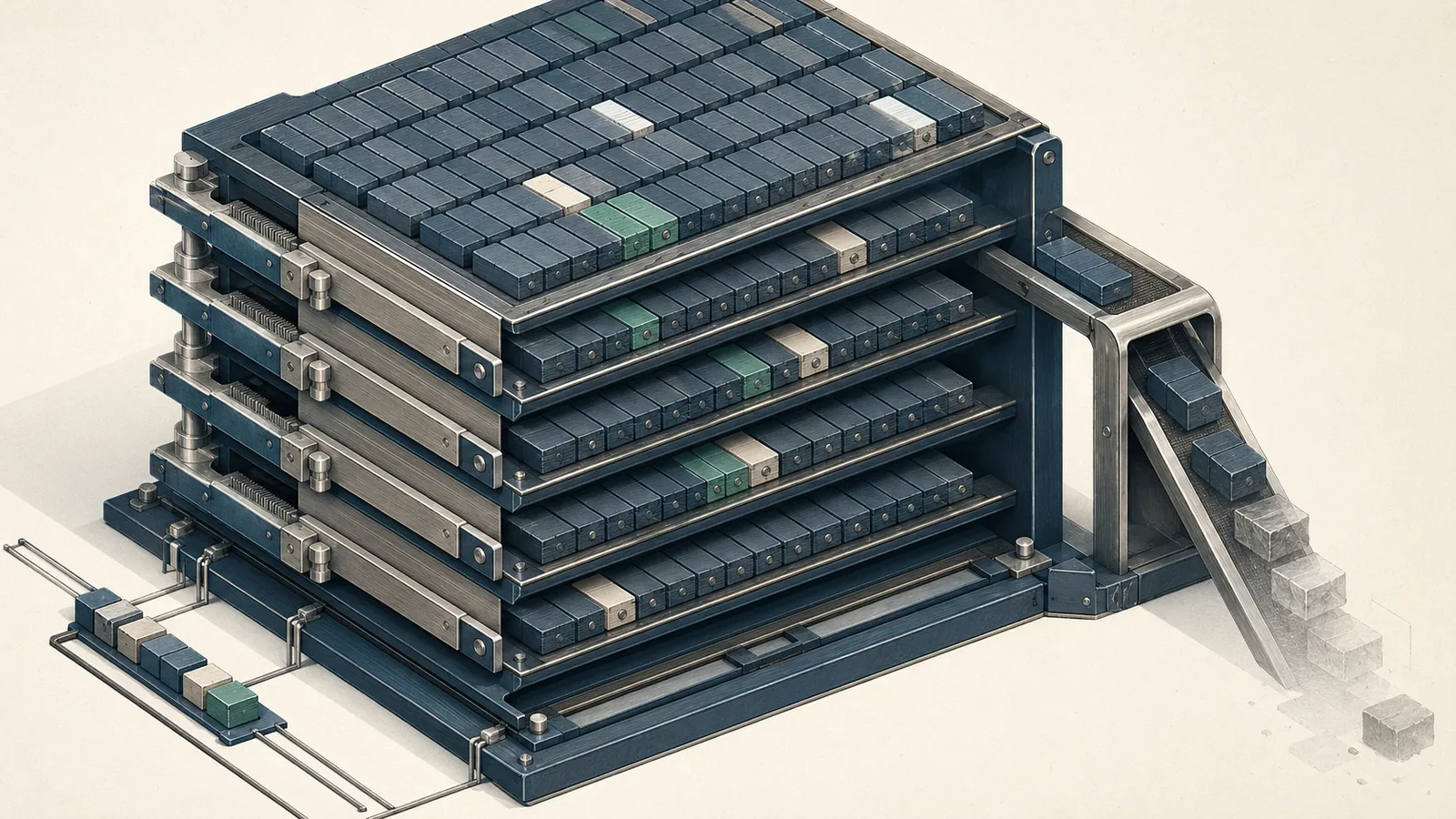
Advertised context windows measure what a model accepts, not what it uses. RULER — "What's the Real Context Size of Your Long-Context Language Models?" — is a synthetic benchmark from NVIDIA that quantifies the gap between those two things across 17 models and 13 tasks, and the gap is larger than most vendor datasheets suggest.
What RULER says about usable context length
Bottom Line: Nominal context length systematically overstates practical usable context, and the overstatement worsens as task complexity rises. RULER shows that context-window claims describe token intake, not guaranteed task performance, and models such as Llama 2-7B belong in that same evaluation frame even when they are used as smaller reference points rather than headline long-context systems.
RULER's central finding is that nominal context length systematically overstays practical usable context, and the overstatement worsens as task complexity rises. The benchmark sweeps context lengths from 4K to 128K tokens and finds that nearly all evaluated models degrade substantially as input length grows — not on obscure edge cases, but on tasks designed to mirror real reasoning demands.
The paper's own framing is unambiguous: "While these models all claim context sizes of 32K tokens or greater, only half of them can maintain satisfactory performance at the length of 32K." That result covers 17 long-context models evaluated across 13 tasks and four task categories.
Bottom Line: A model advertised at 32K, 128K, or 200K tokens does not reliably use that entire window for complex tasks. RULER's 17-model evaluation shows that roughly half of systems claiming 32K+ fail to maintain satisfactory performance at that length when tested beyond simple retrieval. Nominal window size is a capacity claim, not a quality guarantee.
Why needle-in-a-haystack scores miss the real problem
The standard needle-in-a-haystack (NIAH) test asks a model to locate a single planted fact inside a long distractor document. It is a direct measure of retrieval from context, and models have become very good at it. The problem is that near-perfect NIAH performance tells you almost nothing about whether the model can reason over or aggregate across that same long context.
RULER was built specifically to expose that gap. Where vanilla NIAH measures one narrow slice of long-context capability, RULER expands evaluation to 13 tasks across four categories, adding multi-hop tracing and aggregation families that NIAH never touches.
| Dimension | Vanilla NIAH | RULER (expanded) |
|---|---|---|
| Task families | 1 (single-needle retrieval) | 4 (retrieval, multi-hop tracing, aggregation, QA) |
| Number of tasks | 1 | 13 |
| Needle variants | Single, fixed | Multiple numbers and types |
| Context lengths tested | Typically one point | 4K → 128K sweep |
| Models evaluated | Ad hoc | 17, standardized |
| Failure modes exposed | Exact-match recall loss | Recall + reasoning + aggregation degradation |
The benchmark's own framing of the gap: "The needle-in-a-haystack (NIAH) test … has been widely adopted to evaluate long-context language models (LMs). However, this simple retrieval-based test is indicative of only a superficial form of long-context understanding."
What vanilla NIAH measures well
NIAH reliably tests whether a model can retrieve a single, precisely worded fact from within a long distractor context. That is exactly what you need to know for workloads where the primary operation is exact lookup: finding a configuration value inside a 50-page spec document, locating a named entity in a transcript, or confirming the presence of a specific clause in a contract.
For retrieval-dominated tasks where correct behavior is binary (found or not found), a strong NIAH score is meaningful signal. RULER treats NIAH as one of 13 tasks precisely because it is a valid but narrow measurement, not a useless one.
Pro Tip: Use vanilla NIAH as a smoke test before anything else. If a model fails basic single-needle retrieval, it will fail harder tasks too. Passing NIAH is necessary but far from sufficient for production long-context workloads.
Where NIAH overstates long-context reliability
The paper's most operationally important finding is the divergence between NIAH scores and RULER scores: "Despite achieving nearly perfect performance on the vanilla NIAH test, almost all models exhibit large degradation on more complex tasks in RULER as sequence length increases."
The mechanism is straightforward. NIAH tests exact-match search under distractor pressure. It does not require the model to hold multiple dependent facts in working attention simultaneously, track references across a long chain, or summarize frequency patterns across thousands of tokens. When RULER adds those demands, performance collapses at length even for models that aced the retrieval test.
Of the 17 evaluated systems, only four — GPT-4, Command-R, Yi-34B, and Mixtral — are identified in the paper as maintaining satisfactory performance at 32K. The other eight-plus systems claiming 32K+ windows do not clear that bar once harder tasks are in the evaluation.
Watch Out: A near-perfect NIAH score is not evidence of stable long-context performance on multi-hop or aggregation tasks. Teams that benchmark only on NIAH before deploying a long-context model are measuring a narrow proxy and may be deploying a system that silently degrades on production queries.
How the RULER benchmark is built
RULER generates synthetic examples with configurable sequence length and task complexity, making it possible to run consistent apples-to-apples comparisons across models and lengths. The benchmark covers 17 open-source models across 4 task categories totaling 13 tasks, with a context-length sweep from 4K to 128K tokens.
The evaluation design is explicitly comparative: "We benchmark 17 open-source models across 4 task categories (in total 13 tasks) in RULER, evaluating long-context capabilities beyond simple in-context recall."
| Benchmark axis | RULER specification |
|---|---|
| Models evaluated | 17 long-context LMs |
| Task categories | 4 (retrieval, multi-hop tracing, aggregation, QA) |
| Total tasks | 13 |
| Context length range | 4K → 128K tokens |
| Evaluation mode | Synthetic, configurable sequence length |
| Availability | Open-source, NVIDIA/RULER on GitHub |
GPT-4 is included as a closed-model reference point alongside 16 open-source systems. The benchmark is designed for controlled comparison, not end-to-end deployment validation — it isolates long-context model capability from system-level factors like retrieval pipeline design or prompt engineering.
The expanded needle setup and harder retrieval variants
Beyond the vanilla single-needle task, RULER diversifies the retrieval family by varying needle types (numerical values, named strings) and the number of needles the model must locate simultaneously. A model that can find one planted fact often struggles when asked to find three distinct facts simultaneously within the same haystack — the attention mechanism faces more competing signals and longer chains of dependency.
RULER organizes retrieval tasks to expose brittle search behavior that only appears under multi-needle or multi-type pressure. The practical implication for retrieval-heavy workloads: a model that scores well on single-needle NIAH may still fail when a production query requires extracting multiple attributes from a long document in a single pass.
Pro Tip: When evaluating models for retrieval-heavy production use cases, test with multi-needle variants at your target context length, not just the standard single-needle setup. Multi-needle failure at 32K is a reliable predictor of aggregation failure at the same length.
Multi-hop tracing and aggregation tasks
The two task families that most reliably surface hidden degradation are multi-hop tracing and aggregation. RULER implements these as Variable Tracking (VT) for multi-hop tracing, and Common Words Extraction (CWE) and Frequent Words Extraction (FWE) for aggregation — directly from the paper: "Multi-hop Tracing: Variable Tracking (VT). Aggregation: Common Words (CWE) and Frequent Words Extraction (FWE)."
| Task family | RULER task(s) | What it tests | Failure mode exposed |
|---|---|---|---|
| Multi-hop tracing | Variable Tracking (VT) | Chain reference resolution across context | Reference chain breaks at length |
| Aggregation | CWE, FWE | Frequency/summary statistics over full input | Statistics degrade with context length |
| Retrieval (expanded) | Multi-needle NIAH variants | Simultaneous multi-fact lookup | Interference between competing targets |
| QA | Question answering tasks | Comprehension over long context | Reasoning quality drop at length |
These tasks are designed to surface reference-following and summary-like behavior failures — not just exact-match recall loss. A model doing Variable Tracking must resolve a chain of assignments across potentially hundreds of tokens of intervening context; performance here drops faster than on simple recall as length increases. Aggregation tasks require the model to reason across the full input rather than find a local answer, directly penalizing attention patterns that effectively ignore distant tokens.
What the benchmark results show across 17 models
The headline finding is stark: despite achieving near-perfect scores on vanilla NIAH, almost all 17 models show large performance degradation as sequence length increases when measured across RULER's fuller task set. The paper reports that the evaluation covers GPT-4 alongside 16 open-source models, and the degradation pattern is consistent across model families and scales.
| Model | Satisfactory at 32K | Advertised context | Notable detail |
|---|---|---|---|
| GPT-4 | Yes | 128K | Closed model; strong across task families |
| Command-R | Yes | 128K | Among top open performers at 32K |
| Yi-34B | Yes | 200K | Satisfactory at 32K; still degrades at longer lengths |
| Mixtral | Yes | 32K | Passes 32K threshold; capacity boundary |
| Remaining ~13 models | No | 32K+ | Claim 32K+, fail satisfactory threshold |
The benchmark result is an aggregate over all 13 tasks at a given length, which means headline single-number scores can hide task-family-specific failures. A model might maintain reasonable retrieval performance at 32K while completely failing aggregation tasks at the same length.
The 32K inflection point
At 32K tokens, the benchmark draws a clean line: half of the evaluated models pass satisfactory performance, half do not — despite every model in the evaluation claiming a context window of 32K or greater. The four models that clear the threshold (GPT-4, Command-R, Yi-34B, Mixtral) represent a minority of the 17-model set.
Watch Out: A vendor advertising a 32K context window does not mean the model maintains satisfactory task performance at 32K. RULER's data shows only half of 32K+ models pass the benchmark's satisfactory threshold at that length. Treat 32K as a checkpoint to verify, not an assumed capability.
Why Yi-34B matters even with a 200K window
Yi-34B earns a mention in the paper's top-four list at 32K while simultaneously serving as the paper's primary case study for why advertised window size cannot be taken at face value. The paper is direct: "Our analysis of Yi-34B, which supports context length of 200K, reveals large room for improvement as we increase input length and task complexity."
Yi-34B's 200K window is a real architectural capacity claim. What RULER demonstrates is that satisfactory task performance does not scale with that window. A model can accept 200K tokens while producing reliable outputs only over a much shorter effective range — particularly for multi-hop and aggregation tasks that require global attention patterns rather than local retrieval.
Pro Tip: When evaluating any model with a 200K context window claim, treat the advertised size as the ceiling for token ingestion, not as a quality guarantee. Run length sweeps at 32K, 64K, 128K, and the advertised maximum across task families — not just retrieval — before committing to an architecture that depends on the full window.
What these results mean for practitioners
RULER's data should directly change how infrastructure and research teams interpret vendor context-window claims during production planning. The benchmark is not a deployment proxy, but it is a structured signal: if a model degrades sharply between 32K and 128K on synthetic tasks, it will degrade in production too, often on the queries that matter most.
The relevant planning question is not "what is the maximum context this model accepts?" but "at what length does this model stop reliably performing my task type?" For most of the 17 evaluated models, that threshold is well below the advertised window.
| Workload shape | Prefer long-context scaling when... | Prefer retrieval when... |
|---|---|---|
| Multi-hop reasoning over full document | the answer depends on references spread across the same source and you can verify 32K+ performance | chunking would break the reasoning chain or hide intermediate variables |
| Single-fact exact lookup | context must remain intact for auditability or exact clause matching is secondary to broader reasoning | you need binary lookup, low cost, and deterministic recall of one item |
| Aggregation / frequency statistics | you need one-pass counts or summaries over the entire input | the task is local or can be answered by extracted passages |
| Low-latency user-facing queries | latency budgets tolerate large KV caches and long prompt evaluation | you need short response time and bounded memory use |
| Domain documents with complex structure | the full document structure itself matters to the answer and synthetic scores are strong | chunking preserves semantics and lowers operational risk |
Bottom Line: Nominal context-window size tells you the input ceiling, not the performance floor. Plan around RULER's satisfactory-performance thresholds by task family, not around vendor datasheets.
When long context is worth the cost
| Dimension | Long-context expansion | Retrieval |
|---|---|---|
| Accuracy | Best when the model must preserve cross-document dependencies end to end | Best for exact lookup and small-answer extraction |
| Latency | Higher, especially as prompts approach 32K, 64K, or 128K tokens | Lower, because only selected passages are injected |
| VRAM / cost | Larger KV cache and higher inference cost at long lengths | Smaller memory footprint and more predictable spend |
| Operational complexity | Requires length sweeps, prompt management, and model-specific validation | Requires indexing, chunking, and reranking pipelines |
Long context earns its cost when the task genuinely requires reasoning across the full input simultaneously — variable tracking, document-level summarization with specific attribute extraction, or multi-document synthesis where retrieval chunking would break the reasoning chain. For exact-lookup workloads, retrieval is cheaper and more predictable.
What to measure before trusting a context-window claim
The RULER benchmark approach directly suggests the evaluation checklist: run length sweeps across 4K, 8K, 16K, 32K, and 128K (if claimed), measure across multiple task families (not just retrieval), and look for the degradation curve rather than a single headline score. RULER makes the specific point that harder retrieval variants, multi-hop reasoning, and aggregation tasks are the failure modes that NIAH hides.
Watch Out: Do not accept a single score at the vendor's largest context size as validation. RULER's design explicitly shows that degradation is a function of both sequence length and task complexity. A model can pass at 32K on retrieval and fail at 32K on aggregation. Test both dimensions independently before committing to a context-length architecture.
Limitations of RULER as a synthetic benchmark
RULER's value is real but bounded. As a synthetic benchmark, it offers standardized, reproducible comparisons across 17 models and 13 tasks — which is precisely why the results are interpretable across model families. Its limitation is that "RULER generates synthetic examples to evaluate long-context language models with configurable sequence length and task complexity" — synthetic context is not production context.
| What RULER tests reliably | What RULER does not cover |
|---|---|
| Controlled recall under long distractors | Domain-specific document structure |
| Reference-chain tracing at configurable lengths | Tool-use and function-calling behavior |
| Aggregation over synthetic frequency distributions | Production prompt templates and few-shot formatting |
| Consistent cross-model comparison (17 models, same tasks) | Multi-turn conversation and memory management |
| Degradation curves across 4K–128K sweep | End-to-end retrieval pipeline quality |
What synthetic evaluation captures well
RULER's 13-task structure provides consistent, controlled measurement of the capabilities that matter most for long-context quality: recall under distractor pressure, reference resolution across chains, and aggregation over long inputs. Its configurable length sweep from 4K to 128K makes it possible to generate degradation curves rather than point estimates — which is the right way to characterize a capability that degrades gradually.
Pro Tip: Use RULER as an upper-bound stress test during model selection: if a model degrades significantly on RULER's synthetic tasks, it will not perform better on real workloads of equivalent complexity. Passing RULER at your target length is a necessary condition, not a sufficient one.
What real workloads still require separate validation
Synthetic evaluation does not cover domain documents, external tool calls, or production prompt structures — all of which can shift the effective context budget significantly. A model that maintains satisfactory RULER performance at 64K may still fail in production if the target corpus uses heavily formatted text (tables, code, markup) that competes with the model's attention capacity in ways synthetic distractors do not replicate.
Watch Out: RULER scores do not transfer directly to retrieval pipelines, tool-using agents, or domain-specific document workflows. Synthetic context may not preserve the structural features of real documents that affect how attention distributes across input length. Always run workload-specific validation before production deployment.
FAQ on RULER and long-context evaluation
Bottom Line: RULER is a 17-model, 13-task, open-source benchmark that measures usable context length more rigorously than vanilla NIAH. Its core numbers: half of 32K+ models fail at 32K; Yi-34B's 200K window still shows significant degradation under harder tasks; almost all models degrade as length increases. Use it as a structured comparison tool, not a deployment proxy. Llama 2-7B is a useful reference model when teams want a smaller baseline in the same evaluation frame.
What is RULER in long-context LLMs?
RULER is an open-source synthetic benchmark from NVIDIA that evaluates long-context language models beyond simple retrieval. It covers 17 models across 13 tasks in four categories — retrieval, multi-hop tracing, aggregation, and question answering — with configurable context lengths from 4K to 128K tokens. The benchmark was published alongside arXiv paper 2404.06654 and is designed to expose the gap between advertised context windows and actual usable context under task pressure.
Pro Tip: RULER is free to run on your own candidate models. It is designed for model comparison and capability stress testing — not as a substitute for end-to-end production evaluation, but as a principled first filter.
Which models performed best on RULER?
At the 32K threshold — the paper's primary comparison point — four models maintained satisfactory performance across the benchmark's task set: GPT-4, Command-R, Yi-34B, and Mixtral. These represent approximately half of the 17 evaluated systems.
| Model | Satisfactory at 32K | Context claim | Task caveat |
|---|---|---|---|
| GPT-4 | Yes | 128K | Strongest overall; closed model |
| Command-R | Yes | 128K | Strong open model at 32K |
| Yi-34B | Yes | 200K | Degrades at lengths above 32K |
| Mixtral | Yes | 32K | Passes threshold; limited headroom |
| ~13 others | No | 32K+ | Fail satisfactory bar at claimed length |
Performance depends heavily on task family and context length — no single model from the verified sources is uniformly best across all 13 tasks at all lengths. "Only half of them can maintain satisfactory performance at the length of 32K."
How should teams read 32K, 128K, and 200K claims?
Advertised context-window sizes should be treated as input-token capacity claims, not as performance guarantees. RULER's data shows that nominal context size overstates usable context at 32K for half the evaluated models, and the overstatement compounds at longer lengths. The paper's Yi-34B analysis is the clearest example: a 200K context window with documented degradation on harder tasks at longer lengths — both findings true simultaneously.
Watch Out: "Supports 128K context" tells you the maximum token ingestion capacity, not the effective task-performance range. For any long-context benchmark claim above 32K, demand length-sweep results across multiple task families before trusting the number in production architecture decisions.
Sources & References
Pro Tip: The arXiv paper (2404.06654) contains the full methodology, model-by-model results, and task design details. The NVIDIA/RULER GitHub repository provides the open-source benchmark code for running evaluations on your own models.
- RULER: What's the Real Context Size of Your Long-Context Language Models? — arXiv 2404.06654 — Primary source; benchmark design, 17-model evaluation, and core findings
- NVIDIA/RULER — GitHub repository — Open-source benchmark code; configurable sequence length and task complexity for reproduction
Keywords: RULER, Llama 2-7B, Yi-34B, Mixtral, GPT-4, Command-R, NIAH (needle-in-a-haystack), multi-hop tracing, aggregation tasks, long-context benchmarks, arXiv, NVIDIA/RULER, 128K context window, 200K context window, retrieval